TDs query Irish Water’s access to DPP ahead of legal actions


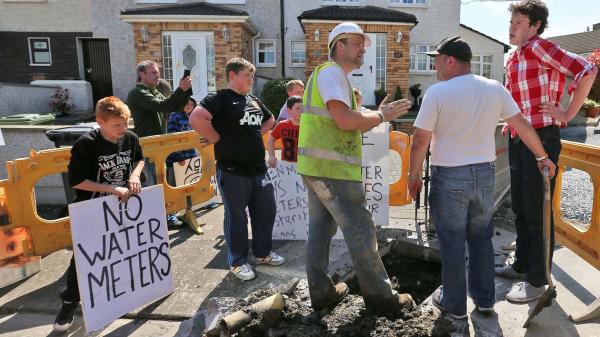
Anti-meter protesters confront Irish Water contractors in Raheny
Colin Keegan

by Justine McCarthy

Irish Water has held discussions with the Office of the Director of Public Prosecutions (DPP) about how the utility’s relationship with water meter installers can be “best presented” in criminal prosecutions.

TDs who oppose water charges claim the discussions indicate an “unusual level of access to the DPP” and say that they intend to raise the matter in the Dail.

The discussions came to light in a letter obtained during court proceedings relating to an anti-metering protest in Dun Laoghaire in May 2015.

The letter, dated July 20, 2015, was written by Kevin McSherry, Irish Water’s metering development manager, and was addressed to Superintendent Kevin Dolan in Dun Laoghaire garda station. It described the discussions with the DPP’s office as being “at a high level”.

McSherry said it had been agreed that a corporate witness statement would be provided for each prosecution from a senior Irish Water manager, “which will highlight, inter alia, the relationship between Irish Water and its contractors and the fact that Irish Water is entitled, pursuant to its corporate memorandum and articles, to act through contractors”.

Joan Collins, an Independents 4 Change TD who was acquitted last February of charges arising from an anti-water protest, said: “I would think it’s highly irregular that a company would have direct contact with the DPP, and I’ll be asking questions in the Dail.

“The DPP is supposed to be independent. She cannot even give reasons for her prosecution decisions. To have a company have private discussions with her or her officials is sinister.”

A spokeswoman for Irish Water said “there was nothing out of the ordinary” about the meeting. “[It] was simply for the purposes of clarifying a legal procedural query we had,” she said. “An Garda Siochana had requested clarification on how Irish Water would demonstrate our legal relationship with our metering contractor, as this evidence would be required for any prosecution against a third party for interference or obstruction of the contractor.

“We met with the DPP to clarify the appropriate way to provide evidence of this legal relationship and this was deemed to be through a witness statement.”

Irish Water’s head of capital delivery subsequently provided a witness statement for prosecutions being taken by the DPP.

Paul Murphy, an Anti-Austerity Alliance TD, described the letter as “fairly significant”.

“Irish Water is not the gardai. It is a semi-state company. The letter raises question marks over the DPP and what was happening in those discussions. There is at least a problem of perception,” he said.

Murphy is due to go on trial next year on charges relating to a protest in Jobstown during which Joan Burton, the then tanaiste, was trapped in her car.

The DPP’s office did not reply to questions.

Source: The Sunday Times, Ireland, Sept 25, 2016
              Fliuch, Sept 25, 2016


Smart Meters fail data privacy tests

What you didn't know about your fitness tracker and your right to privacy

by Adrian Weckler
     Irish Independent

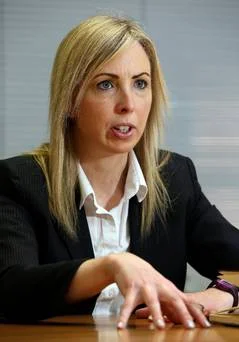
Irish Data Protection Commissioner Helen Dixon

Smart electricity meters and wearable fitness trackers are failing Irish people’s privacy, according to a new report by the data protection regulator.

Helen Dixon’s office will now “step up” audits of technology devices after a survey of 300 ‘internet of things’ devices found “alarming shortfalls in the management of personal data by developers and suppliers”.

The study also involved 25 other data protection authorities. It showed that three quarters of device manufacturers failed to explain how customers could delete their information. It also showed that two thirds of manufacturers failed to explain how information was stored, while three in five failed to explain how personal information would be collected and processed. Just over a third of manufacturers failed to include easily identifiable contact details if customers had privacy concerns.

In the Irish area of study, nine devices were investigated ranging from smart electricity meters to fitness trackers. The data regulator declined to name the manufacturers involved.

However, the office is considering action “against those who are found to be in breach of legislation”.

“The Office of the Data Protection Commissioner is planning to scale up investigative and audit work in this area in 2017,” said John Rogers, the data watchdog’s senior investigations officer who coordinated the Irish sweep. “We have already begun to schedule audits of devices in the technology sector. The purpose of these audits will be to gauge compliance with the Data Protection Acts and to work with companies to ensure that their products are meeting the required standards.”

The sweep was coordinated by the Global Privacy Enforcement Network, an informal network of global data protection agencies.

Source: Fliuch, Sept 23, 2016
             Irish Independent, Sept 22, 2016


Irish Independent, Sept 22, 2016

Irish Water to get €660m bailout

Irish Water will get a €660m bailout this year but a decision to suspend water charges could have “big consequences” for funding other services next year, warns Housing Minister Simon Coveney.

by Juno McEnroe, Irish Examiner

His suggestion was backed by Public Expenditure Minister Paschal Donohoe who said funding for Irish Water would compete with other demands such as housing.

The pre-budget cautions put Fine Gael directly at odds with Fianna Fáil, which wants water charges suspended indefinitely. Taoiseach Enda Kenny yesterday accused Fianna Fáil of a “reversal to old-school populism” in insisting water charges not be reintroduced.

Funding for Irish Water is being considered by a commission on water charges, due to report in November.

Mr Coveney said the 2017 position on funding for Irish Water is dependent on what the commission and a follow-up Dáil committee conclude.

It had been planned that the subvention, or bailout, for Irish Water would be €479m. Irish Water estimates its shortfall from water charges to be €181m for this year. This brings the total subvention needed for Irish Water this year to €660m, Mr Coveney told the Oireachtas housing committee.

The €181m shortfall will be plugged by the €110m that was to go to the water conservation grant, a €58m loan to Irish Water, and another €13m still to be found.

Mr Coveney said the €110m from the conservation grant would not be there next year. “Let’s be honest about this, if the Oireachtas decides to do away with water charges, then we still need to progress and deliver on the significant capital expenditure programme that Irish Water needs to deliver on,” he said.

“That will have to come through other revenue raising and presumably general taxation, which then limits our ability to spend in other areas and also undermines the water conservation incentive that comes with having some link between what people pay and how much they use, never mind all the issues around water directives.”

Funding for Irish Water will be discussed when the commission reports and in the context of the budget, the committee was told.

Mr Coveney said: “But the choices we make have consequences, big consequences, because regardless of what way you cut it, we have to invest billions of euros over the next five years in water infrastructure and it has got to be paid for. The only question we have to decide is, do we pay for that through general taxation; do we pay for it through a combination of general taxation and direct charging that tries to incentivise conservation and water management; or do we go back to a previous charging system?”

He added: “There is a big cost if we decide not to have revenue stream coming from water provision to domestic houses. There are big consequences in terms of the flow of money in and out of government.”

Separately, Mr Coveney warned local authorities not to expect the Government to “pick up the tab” if they reduce property taxes next year. Some 16 councils cut rates last year and 11 had done so this year, he said.

The warning on water was also made by Mr Donohoe, when he told a separate committee about budget preparations. Water treatment coming directly from general taxation would “directly compete with other needs” including housing, he said.

Source: Irish Examiner, Sept 22, 2016