
Paul Murphy TD speaking in the Dáil on June 21 on forced migration driven by war and climate change. According to the UN there are 65.3 million people worldwide forcibly displaced by war, climate change and human rights. What is the response of the EU?
Michigan attorney general sues France's Veolia in Flint water crisis
DETROIT • The Michigan attorney general on Wednesday sued French water company Veolia and a Texas firm for "botching" their roles in the city of Flint's drinking water crisis that exposed residents to dangerously high lead levels.

Attorney General Bill Schuette said at a news conference in Flint that the civil lawsuit was filed in Genesee County Circuit Court against Veolia Environnement SA and Houston-based engineering services firm Lockwood, Andrews & Newnam (LAN).
The lawsuit charged Veolia with professional negligence and fraud that caused Flint's the lead poisoning to continue and worsen, and LAN with professional negligence.
Schuette said the state is seeking damages from the companies that could total hundreds of millions of dollars. His office said additional claims against the firms or others may be filed in the future.
"Many things went tragically wrong in Flint, and both criminal conduct and civil conduct caused harm to the families of Flint and to the taxpayers of Michigan," Schuette said. "In Flint, Veolia and LAN were hired to do a job and failed miserably, basically botched it. They didn't stop the water in Flint from being poisoned. They made it worse."
Veolia was hired in February 2015 by the city to address drinking water quality and produced at least one report and one public presentation stating the city's water was safe to drink, according to the lawsuit. The company knew its representations were false, the lawsuit stated.
Paris-based Veolia said Schuette's office did not contact the company about its work and that its contract was unrelated to the current lead problem.
It said it will defend itself against "these unwarranted allegations of wrongdoing." Veolia shares dipped 0.2 percent.
In 2013, LAN worked with Flint to prepare the city's water plant to treat new sources of drinking water, including the Flint River, according to the lawsuit.
LAN did not issue corrosion control measures in April 2014 and in August 2015 produced a report saying the water met federal safety requirements, failing to recognize the lead problem, according to the lawsuit.
In a statement, LAN said it "was not hired to operate the water plant and had no responsibility for water quality." It will "vigorously defend itself against these unfounded claims," it said.
Flint, with a population of about 100,000, was under control of a state-appointed emergency manager in 2014 when it switched its water source from Detroit's municipal system to the Flint River to save money. The city switched back in October.
The river water was more corrosive than the Detroit system's and caused more lead to leach from its aging pipes. Lead can be toxic, and children are especially vulnerable. The crisis has prompted lawsuits by parents who say their children have shown dangerously high levels of lead in their blood.
Last month, a Flint utilities administrator agreed to cooperate in investigations as part of a deal with prosecutors. Two state employees have been charged by Schuette's office, and he reaffirmed Wednesday that other employees would be charged as the investigation continues.
Todd Flood, who is leading the state probe, said on Wednesday he has not received all documents that have been requested, including those from Gov. Rick Snyder's office. Some people have criticized the governor and called on him to resign for the state's poor handling of the crisis.
When asked if Snyder was a target in the investigation, Schuette said there are no targets but "nobody is off the table."
In 2013, the administration of St. Louis Mayor Francis Slay pushed to sign a $250,000 consulting contract with Veolia, saying that the company would help make the city water division more efficient. But the proposal met with strong opposition, and Veolia withdrew from consideration.
Original article; St Louis Post Dispatch, June 22, 2016
Cabinet approves Water Services (Ammendment) Bill 2016, a paradox
Read outline of bill below and how Buncrana Together's sees this Bill and Government action as a paradox.
Juno McEnroe, Political Correspondent writes in the Irish Examiner, June 15, 2016
Bill to suspend water charges passed by cabinet
Legislation to suspend water charges has been agreed by the Cabinet. From June 30, homeowners will no longer be sent bills for at least nine months.
Terms for a commission to examine the future of charges as well as that of Irish Water are also set to be finalised next week.
Housing Minister Simon Coveney brought details of the legislation to suspend charges before his Cabinet colleagues, which will be published later this week.
The particulars of the Water Services Bill were essentially agreed between Fine Gael and Fianna Fáil during the government formation talks and specifically the ‘supply and confidence’ agreement.
A Government spokesman yesterday said charges would be suspended by June 30. But a spokesman for Mr Coveney said this was not conclusive as the date would depend on when the legislation passed through the Houses of the Oireachtas.
Under the Fine Gael and Fianna Fáil deal, charges will be suspended for nine months while a commission examines them. Its recommendations will then be referred to an Oireachtas committee. The Dáil will then vote on that committee’s final recommendations.
Mr Coveney has already indicated that the period of suspension could be longer than nine months. This would likely be the case if the commission or committee’s work did not finish during that time.
Original article; Irish Examiner, June 15, 2016
Water Services (Amendment) Bill 2016
The bill and its passage in the Dail can be read or downloaded here. Below is an explanation in full which can also be found at the aforementioned link.

General
The Water Services Act 2014 provided for a revised domestic public water charging system, which commenced on 01 January 2015. Irish Water began charging in respect of dwellings receiving its services from 01 January 2015, with quarterly bills issuing from April 2015 for the previous quarter (e.g. customers received a bill in Quarter 2 2015 in respect of Quarter 1 2015).
This Bill provides for the suspension of domestic water charges for nine months, from 01 April 2016 to 31 December 2016, to provide time for an extensive deliberative process to be undertaken on the funding of domestic water services.
Firstly, the Government will establish an expert commission, which will make recommendations on a sustainable long-term funding model for the delivery of domestic water and wastewater services by Irish Water.
Secondly, a special Oireachtas committee on the funding of domestic water services will then consider these recommendations and endeavour to make its own recommendations. Finally, the Oireachtas will consider and vote on these recommendations.
Financial Implications
The suspension of domestic water charges from the beginning of Quarter 2 2016 to the end of Quarter 4 2016 will result in customer revenue losses for Irish Water requiring additional Exchequer subvention in 2016.
Due to the suspension of the 2016 Water Conservation Grant, for which €110 million was originally allocated, the net additional cost of suspending water charges for nine months is unlikely to exceed €20 million in 2016.
Section 1
Definitions
This section sets out the definitions for terms used in the Bill.
Section 2
Suspension of domestic water charges
This section provides for the suspension of domestic water charges (except for connection charges) for a period of nine months, commencing on 01 April 2016. The section also provides for a prohibition on Irish Water billing domestic customers for water services between the commencement of the Act and 31 March 2017 (i.e. the billing period for 01 April 2016 to 31 December 2016), or at any future time, in respect of the nine month period of suspension.
The section also provides that the Minister for the Environment, Community and Local Government shall extend the nine month period of suspension by way of Ministerial Order for a further period if he or she is satisfied that an Oireachtas committee, established to examine the issue of funding of domestic public water services, will not conclude its work by 31 March 2017.
The Minister may also extend the suspension, by order, to enable the Government to consider the recommendations of the Oireachtas committee.
Under the section, Irish Water shall be prohibited from billing domestic customers for water services during any period of extension of the suspension of water charges (i.e. any period of suspension beyond 31 December 2016), from the commencement of the Act to 31 March 2017 (i.e. the billing period for 01 April 2016 to 31 December 2016), or at any future time.
The section also provides that Irish Water shall not include the period of suspension of domestic water charges in calculating the time period of unpaid water charges, for which a late payment charge applies.
Section 3
Short title
This is a standard provision to provide for the short title.
An Roinn Comhshaoil, Pobail agus Rialtais Áitiúil, Meitheamh, 2016.
Buncrana Together
We have major reservations about this bill and any commission that is set up. See our other articles for details, here and another here. We see these events as a ploys used to defuse anger and opposition to Irish Water and Water Charges and as a political maneuver by both Fine Gael and Fianna Fail to suit their respective right wing party interests.

This Fianna Fail and Fine Gael deal and its implementation, in regards to the Water Charges issue is something of a paradox. Not only has the Irish people clearly made their opposition felt in the General Election in February 2016 but also we now have a minority government, Fine Gael, implementing the agreement and the other party to the agreement, Fianna Fail, on the sidelines letting them take the initiative. Apart from little whimpers from Fianna Fail individual party members, Fine Gael's Simon Coveney is in control of the 'Terms of Reference'.
This anomaly is more striking when you think that Fianna Fail promised and was given a mandate to abolish both Irish Water and the Water Charges. This was clearly a 'Core Principle' in their pre-election manifesto.
Irish Water and Water Meters
The confusion is further compounded because Irish Water Ltd is still in existence. This much hated and derided company is being funded by the very people who want rid of them, the Irish people. How many times have we heard from Fianna Fail TDs and even some Government Independent Ministers criticiseIrish Water Ltd and callfor this 'Quango' to be abolished.
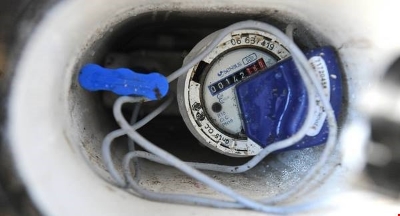
Imagine Irish Water is still happily sucking the public financial well dry, (see Irish Water appoints Jerry Grant to top job ). It is ironical and sinister that the system of installing water meters is still in full swing amid all this confusion. Is the Government presupposing the outcome of what we see as a loaded 'Commission of Experts' which is included in this bill?
Arrests, Imprisonments,
Suspending water charges and in the interim continuing with their related services and installation begs many questions. But the most sinister question is why is Fianna Fail acquiescing to the Government's draconian policy of arresting demonstrators, bringing them to court and even imprisoning them (see our article Two elderly water charge protesters remanded in custody) . Why are these measures continuing and why is the Government spending fortunes pursuing this policy?
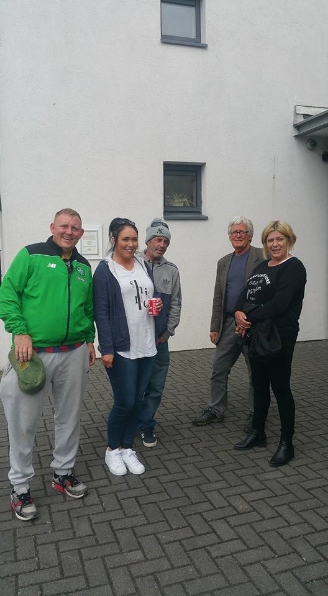
Anti Water protesters were arrested and handcuffed in Tyrellstown, Co Dublin on June 15, 2016. They were released the same day without charge. Click photo to view video.