Senior garda faces probe over water protest 'leaks'

A senior garda is facing investigation over the leaking of information to RTÉ following an incident in which Joan Burton was blockaded by water protesters.
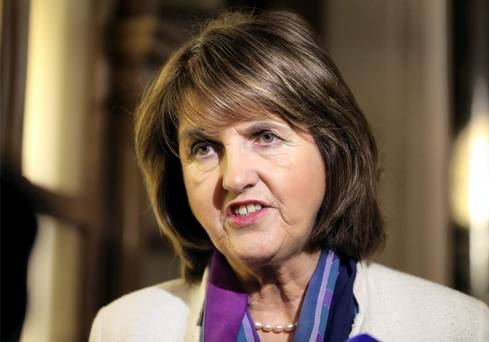
Labour’s Joan Burton was left stranded in her car by protest. Photo: Frank McGrath

An internal Garda investigation was launched after RTÉ broadcast details of charges against 20 people arising from the incident outside a community centre in Tallaght in November 2014.

During the protest the then Labour leader had to sit in her official car for two hours as it was surrounded by protesters.

The news report by RTÉ crime correspondent Paul Reynolds led to a complaint by Socialist TD Paul Murphy to the gardaí, the Garda Ombudsman and the Director of Public Prosecutions (DPP).

In a news report on August 12 last year, Mr Reynolds gave details of expected arrests and court appearances.

The report contained information about the total number of arrests due, the number and type of files sent by the Garda to the DPP, and that the accused were due to appear in court in the coming days. The report also contained information that the DPP had recommended charges in files returned to the garda investigators. The cases are before the courts.

Mr Murphy later said the information could only have come from the DPP or gardaí and he had "written to the appropriate authorities in both seeking to establish what investigations will be carried out to determine the source of the leak".

Two senior officers from outside Dublin were given the task of heading the investigation of Deputy Murphy's complaint.

The investigation into the RTÉ report involved the checking of mobile phone records from, and to, the journalist.

The garda press office said: "An investigation into how this information appeared in the media was launched on the Thursday 13th August, 2015. This investigation is ongoing." RTÉ said it did not wish to comment on an "ongoing garda investigation'"

It is one of a series being carried out by gardaí into alleged leaks. In May last year Superintendent Dave Taylor, the former head of the Garda Press Office under the previous Commissioner Martin Callinan, was arrested and suspended from duty on severely reduced salary.

A file was prepared for the DPP arising out of the investigation into Supt Taylor which was headed by Superintendent Jim McGowan, Commissioner Nóirín O'Sullivan's husband. Ms O'Sullivan has stated she saw no conflict of interest in this.

It is understood that the file prepared by Supt McGowan's team and sent to the DPP alleging "unlawful" disclosure of information to journalists has been returned to the Garda after the DPP decided there was no evidence on which to base any charge.

The piece of legislation under which Supt Taylor was arrested and detained for several hours n is Section 62 of the 2005 Garda Síochána Act. The legislation provides for up to seven years imprisonment and or a €75,000 fine for 'unlawful disclosure' of information.

It had only been used in one previous case against a garda who exposed an attempt by former Green Party TD Trevor Sargent over his intervention in a prosecution in his north Dublin constituency. Mr Sargent subsequently resigned in February 2010. A garda was arrested, questioned and a file sent to the DPP who directed no charges be brought.

Original article; Jim Cusack, Irish Independent, June 15, 2016


Whatever Enda's Commission decides, we will not pay

"Whaever Enda's Commission decides, we will not pay."  
This is a statement including the poster below from People Before Profit, published on June 13, 2016.


This People Before Profit's call for boycott succinctly describes   what we think of the recent publication from the ultra right wing Fine Gael Government's 'Terms of Reference" for an 'Expert Commission on Domestic Public Water Services" on June 11, 2016.  (See our article here for details.).  

This so called 'expert commission',  is a result of political maneuvering  between Fine Gael, Fianna Fail parties and some Independents after two and half months of prolonged political bartering.  Eventually this resulted in the formation of a Fine Gael minority government.   Interestingly it was the Fianna Fail party who for self preservation, with one eye on the next election and the other eye on Sinn Fein, who made a deal with Fine Gael.  Will this deal see Fianna Fail reneging on it's electoral promises of abolition of Irish Water and Water Charges, a clear Fianna Fail 'Core Policy'?

It is ironical that the very government who is now setting up this commission and setting out it's 'Terms of Reference' is the very government who, three years ago, hurriedly and extravagantly established  the Irish Water Ltd company and  it's policy of water charges.  It spent billions of euros on 'expert advice' from multinational and national 'experts', and implementation of one failed policy after another.  On the whims of experts and EU task master.  

For three years the Fine Gael led coalition government battled with the Irish people and used every means in their arsenal including; spending a fortune in public relations, (a euphemism for lies and mind manipulation), monetary and judicial threats and intimidation,  in their effort to railroad what the Irish people twice in the past refused to accept, the privitisation and commodification of our water resource. 

Despite all the draconian measures, the anti water charge movement withstood the onslaught and grew to be the majority opinion in the country.  This opposition to what was seen as an unjust austerity measure resulted in a resounding defeat for the Fine Gael/Labour Government in February's 2016 General Election.  

The majority of Irish people democratically voted for the abolition of Irish Water Ltd and Water Charges. 

False Terms of References

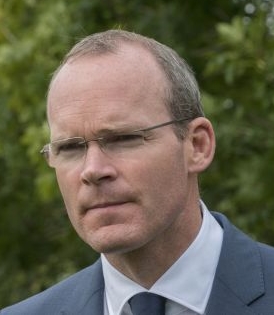
Simon Coveney


 So how come we will have a Fine Gael designed commission where the 'Terms of Reference' and  hand picked 'experts' will be chosen by Simon Coveney?    Where is Fianna Fail and their core promises  in all this?  Where in Minister Coveney's documentation does it say that it will be bound by the democratic wish of the Irish people, a wish that has been resoundingly demonstrated three times in the past 3 decades?   How much more clearer can the message be? 

Shouldn't the first terms of reference  be that any model for domestic water supply must be set up in accordance with the democratically wish  of the Irish people?  It should not be the dictate of Fine Gael, the EU, the IMF or any international expert.  It must incorporate a national coordinating public body overseeing management and County Council's implementation of our water infrastructure.  

Somehow the action of Mr Coveney's government is reminiscent of the 2008 Lisbon Treaty referendum when after the Irish voted 'NO', the establishment, including the EU Commission,  forced a second referendum on the Irish people.   After manipulating  public opinion, carrots and sticks, the second referendum in 2009 overturned the first.   
 

Such manipulation is happening again.  The proposed 'Terms of Reference' is designed for one outcome, that of circumventing the wish of the Irish people.  Once again we will have a lot of money spent on spin, manipulating and threatening public opinion.  

We must learn from past experience.  We can not trust this right wing farce, we can not control it and we can not reform it within.  
 

What we can do is 'Boycott'.  We have the power to do this.


MEP's response to EU commission and Irish government over 9.4 WFD 'Irish Exemption'

Sir, – The European Commission has never made any official statements asserting that Ireland abolishing direct water charges would be in breach of the water framework directive.

The water framework directive, which was adopted in 2000, states that all EU member states may derogate from the water pricing obligations contained within the directive.

In a recent response to a written question submitted by Lynn Boylan, the European Commission confirmed that this derogation still exists. Yes, the response also stated that if “established practice” was a direct water charge then the flexibility to use the derogation would not apply, but here we come to the crux of the matter – “established practice”.

The European Commission is already on record as stating that it considers “established practices” to be those practices which were “an established practice at the time of adoption of the directive”. This directive was adopted on October 23rd, 2000, and transposed into Irish law in 2003, when it is beyond doubt that Ireland used general taxation as its established practice.

Additionally, since direct water charges were introduced in Ireland only in the last year and – far more significantly – since those charges have been rejected by the people, charging directly for water is not the established practice in Ireland.

Furthermore, in a 2014 landmark case on EU water recovery rules, the European Court of Justice found in favour of Germany, after the European Commission tried unsuccessfully to take that state to court for, in its opinion, failing to fulfil its water framework directive obligations. The judgment conclusively stated that it cannot be inferred that the absence of pricing for water service activities will necessarily jeopardise the attainment of the water framework directive.

As recently as January 2016, more than one year after the establishment of Irish Water, in a response to a written question which asked if Ireland would be in breach of the water framework directive if water charges were dropped, the European Commission simply stated that the second river basin management plans would be assessed against the requirements of the directive. Anything else is simply conjecture.

The European Commission has also confirmed in emails to Lynn Boylan and Marian Harkin that if Ireland would like to avail of Article 9.4 (the derogation) then it should submit that request in its second river basin management plan with justification. This second river basin management plan is now not due to be submitted until 2017, with plenty of time for Ireland to establish that derogation.

It is beyond doubt then that if the Irish Government so wishes, it can still use the derogation and justify its use in its river basin management plans, as has been done and is still being done by so many other European regions and countries.

In light of all the above, it is clear that certain commentators and politicians have distorted the debate by misconstruing or embellishing what the European Commission has put on record regarding the derogation from water pricing in the water framework directive. Worse, it is also clear that many of those same politicians are deliberately twisting this clear, unequivocal situation and using it as an excuse not to avail of the derogation, which gives the Irish Government the final say in deciding on water charges. – Yours, etc,

LYNN BOYLAN MEP,

MARTINA

ANDERSON MEP,

MATT CARTHY MEP,

LIADH NÍ RIADA MEP,

LUKE MING

FLANAGAN MEP,

NESSA CHILDERS MEP,

MARIAN HARKIN MEP.

Original article; Irish Times, June 12,2016