
John Tierney is 'wrong man for job, says McGuinness

PAC Chairman John McGuinness

PAC Chairman John McGuinness

The chairman of the Public Accounts Committee, John McGuinness, has launched a blistering attack on Irish Water, saying its boss John Tierney "is the wrong man" to lead the organisation.

In an interview with the Sunday Independent, Mr McGuinness also says Fianna Fail "must get 45 seats" or the future of the party, as well as leader Micheal Martin, will "be in question".

He has also said he has been "vilified" within his own party for speaking out.

Mr McGuinness opposed the establishment of Irish Water and has called for its abolition, but he has also accused former environment minister Phil Hogan of "doing more damage than Cromwell".

Mr McGuinness said it was a "daft idea" by the Government to establish the "super quango" without proper planning and political proofing, but has called on Mr Tierney to depart from his post.

"I know him personally from his time on Kilkenny council. I think he is the wrong man for that job, in terms of the size of the operation. What effort was made to get the skill set required to run a company like that? It was not his fault, the Government set it up, but it is now, as he took the job and is in charge," Mr McGuinness said.

In relation to Mr Hogan, who was a constituency rival of Mr McGuinness in Carlow-Kilkenny until he became EU Commissioner last year, the PAC chairman was scathing in his criticism.

"He is my constituency colleague but he had a job to do, and he botched the job of establishing Irish Water. Like everything else, they are reluctant to do a U-turn when a mistake is made," he said.

"But a big mistake was made; they should have gone back to the drawing board. It wasn't politically proofed and introducing it at a time when the country and its people were in such dire straits was crazy."

He also has railed against the huge cost borne to establish Irish Water.

"It was a daft idea to bring about this super quango when this Government promised it would abolish quangos. That has not happened. Yes, there will be problems in turning back the clock on Irish Water, but the costs of doing that would have to be considered in the context of keeping the thing going," he said.

"What country in the world would transfer €11.5bn in assets to, essentially, a private company and then pay that company €500m a year out of road tax. Nobody seems to be bothered that this money was raised out of road tax, and the roads in the counties are falling asunder."

On Mr Hogan, Mr McGuinness said 'Big Phil's' impact on their home city of Kilkenny had been disastrous, particularly his abolition of town councils.

"All you have to do is look at this city and see the legacy of Phil Hogan. He has divided our city in two. He has ruined and wrecked the structures of local government. He did more damage to it than Cromwell did when he was here," he said.

Speaking as the controversy over the conservation grant raged, Mr McGuinness said it should not be paid, it was as simple as that. It was being given to people who were not co-operating; it was a nonsense that should be stopped, he added.

Turning to the pending general election, Mr McGuinness said Fianna Fail must return with at least 45 seats or the future of the party, as well as leader Micheal Martin, was in question.

"Looking to the general election, we have to come in the mid-40s in terms of seats. It is an issue for Micheal Martin and the party," he said.

"Based on the results in the by-election here and the local elections last year, you would imagine we should be targeting the mid-40s in terms of seats.

"If you were to take the current polls, we are going to come in in the mid-30s. That would be very disappointing for the party."

In terms of coalition options, Mr McGuinness said Fianna Fail could not afford to close the door on any partner at this stage.

"If Fianna Fail gets the numbers to be a player at the table to form a government, they have to keep all of their options open. Yeah, maybe we will look at Sinn Fein, yeah we will look at Fine Gael, yes maybe we will have this arrangement of supporting a minority Fine Gael government from the opposition benches," he said.

But the PAC chairman, who has clashed with his party colleagues over his outspoken views, said the party still had not laid the ghosts of "that defeat of the 2011 election" to rest.

"I am often accused of speaking in a negative vein about everything and anything. If you don't expose the negatives, you will forever have them as ghosts in the room," he said.

"Therefore, these negatives have to be dealt with and they haven't been dealt with.

"It is like a bereavement, and we certainly had a bereavement in 2011. Fifty-eight seats, 58 of my colleagues did not come back."

He went on to talk about how he has met strong resistance to his outspoken views.

"Within my own party, Fianna Fail, I am vilified for talking about radical reform and renewal outside the parliamentary party room, because inside it nothing is ever discussed at length, and any attempt to introduce meaningful discussion or debate is met with a horrified silence.

"My first duty is to the people, not the party, and if my party will not listen, I will take my concerns to the people," he said.

Mr McGuinness said the party was still operating under the same culture that led to those 58 seats being lost.

"But what has not happened within the party is that culture which lost us 58 seats, that culture is still there. A culture of secrecy, interference from the party at national level in local affairs, the non-examination of why people have left the party, why really did Averil Power leave? Why really did David McGuinness leave?" he said.

"The dumping on individuals because they leave and the attempts to discredit them is part of that old culture within Fianna Fail. Shooting the messenger, playing the man not the ball.

"We have never dealt with those cultural issues since that defeat in 2011. No, we haven't dealt with the reasons why we lost so many seats.

"There is a lot of disquiet about it."


'We Make Our Money On Our Reputation’

Elizabeth Arnett, the current spokesperson for Irish Water and former spokesperson for RPS Consulting Engineering

Elizabeth Arnett, the current spokesperson for Irish Water and former spokesperson for RPS Consulting Engineering

On RTÉ Radio One’s This Week programme yesterday, journalist John Burke reported that, after five years and €2.2million in legal fees paid by Dublin City Council, the council has dropped its Supreme Court appeal against a High Court judgement made by Mr Justice Liam McKechnie in 2010.

In his judgement, Judge McKechnie found RPS Consulting Engineering – which had been hired by Dublin City Council to carry out a review of Dublin’s waste policy – had altered official data and waste reports to suit Dublin City Council’s agenda.

He also heavily criticised the then assistant city manager Matt Twomey.

In his ruling, Judge McKechnie said:

“In the course of the hearing, a number of draft reports, prepared by RPS and Dr Francis O’Toole were handed up to the court which contained comments written by the respondents indicating which parts of earlier drafts were acceptable to them and either deleting or rewording those parts which would not have supported their position. Whether or not the city managers were aware of this fact is, in my opinion, immaterial. Mr Twomey certainly was. Such massaging of reports which were later, in their edited versions, released publicly is a strong indicator to me of unacceptable influence in a process supposedly carried out in the public interest. Some view must have been formed in order for the process to start. However, in my opinion, the actions of the respondents in this case, and particularly Mr Twomey, go far beyond this. The indicator rigidity of mind so that from the start there could have been no other outcome. This is particularly serious, notwithstanding any subsequent public consultation. It is clear that such consultation not only did not have, but could not have had any affect on the outcome of the the variation process. It was a given from the start.”

On yesterday’s programme, Mr Burke played a clip from RPS’s then spokesperson, Elizabeth Arnett – the current Head of Communications and Corporate Service at Irish Water – after the ruling was made.

She told RTÉ’s Prime Time:

“RPS were certainly not massaging the figures and I want to categorically refute that. In producing a final report, you produce drafts and you edit and you consult with your client, to make sure you get the right result, that is the way we produce reports. That you get a report, that the figures can stand up. The Environmental Protection Agency can approve, the EPA can approve and all of the statue bodies can approve…We stand over all of the reports. We would never change fact and we would never change our opinion. We might reword, we might delete, we might sharpen up text, to edit it. We would never change fact and we would never change opinion. We make our money on our reputation to be able to provide facts and to provide opinion. I think the entire judgement is wrong.”

Readers will recall that, in November 2013, it emerged Dublin City Council had paid more than €30 million to RPS for its services over the previous ten years in relation to the Poolbeg incinerator, even though the council’s contract with RPS was originally estimated at €8.3million.

The European Commission eventually found that the contract did not conform with EU law.

Readers may also wish to recall that Jerry Grant, a former managing director of RPS from 2002 until 2012, is now Irish Water’s head of asset management.

There you go now.

Listen back in full here

Council drops appeal against Poolbeg incinerator judgment (Irish Times)


Smart meters: criminalising landlords, ripping off consumers

This article is written by Mel Kelly in www.opendemocracy.net August 11, 2015.  It concerns the implementation of a controversial European energy directive in the UK.  (Buncrana Together)

By Mel Kelly

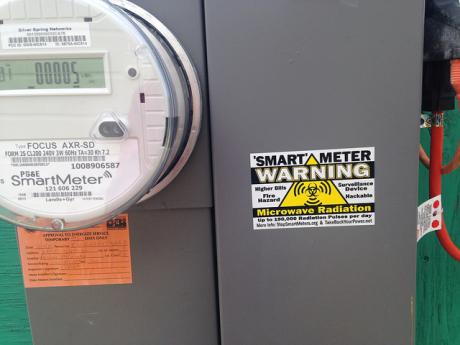
Why is the government rolling out smart meters that have been repeatedly exposed as expensive, poorly tested and potential threats to our privacy?

An EU energy directive proclaimed 80% of homes across the EU should have smart meters fitted by 2020 if fitting them is cost effective in the long run. 

In 2013, the German Economy Ministry described the EU’s recommendation as “inadvisable” because the installation of smart meters “would be too costly for customers… citing an Ernst & Young report which concluded the cost of fitting them outweighs the installation costs”. Nine other EU countries agreed with Germany.

The Coalition government, on the other hand, decided Britain’s taxpayers, already struggling to meet deficit reduction, should be forced to pay £11 billion to roll out “smart” meters to replace the energy meters on behalf of the poor energy industry.

One article which slammed the decision as a colossal waste of cash revealed an independent report written by Mott McDonald for the government stated smart meters would not be cost effective as they would bring a £4 billion net present value cost – the civil service, in contrast, inflated this figure by £8 billion, claiming there would be a £4 billion net present value benefit instead.

But by March this year the Energy and Climate Change Committee themselves agreed with the Mott McDonald conclusion, stating the planned roll-out “runs the risk of falling far short of expectations. At worst, it could prove to be a costly failure”, costing most consumers more than it could save them.

This was backed by a report by the institute of directors in the same month, which warned that the government’s rollout of smart meters “‘should be halted, altered or scrapped’ to avoid a potentially catastrophic government IT disaster” with their report describing the £11bn scheme as “unwanted by consumers, over-engineered and mind-blowingly expensive”.

“No legal obligation”

Despite the weight of evidence now coming against the government rolling out smart meters and the government commitment “there will not be a legal obligation on individuals to have one” the government has decided to not only force smart meters on the nation but to start criminalising those who don’t fit them.

In March this year the coalition government amended “The Heat Network (Metering and Billing Regulations) 2014 ” to make it a criminal offence if public and private landlords do not fit smart meters in their properties if they have more than one tenant and the heat is supplied from “communal or district” heat networks.

The legislation covers both the landlord and all their tenants (and sub-tenants) placing a legal obligation on all to supply “accurate billing information” with landlords having to report to the “National Measurement and Regulations Office” (weights and measures).

This means people renting  in high rise tower blocks, sheltered Housing complexes, eco communities where the power comes from communal and community heating systems must have smart meters fitted by their landlords – by law – despite the government’s claim there would be “no legal obligation” to have one fitted.

Homeowners and sole tenancies are exempt, for now, with the government choosing to target pensioners and the poor in high rise tower blocks first, like benefit changes, targeting the weakest in society first who are paying higher bills than the rest of the nation.

The government has also chosen to target the least powerful in the business community too for smart meters to be fitted first, with most small businesses still unaware “half hourly charging” by energy companies, which just happen to require smart meters, will come into effect, only for “small business premises”, from April 2017.

“Massive collection of personal data”

As well as huge economic cost to landlords, tenants, smallbusiness and the tax payer, the government’s roll out of smart meters reports warn of this also bringing major privacy and health concerns along with massively inflated energy bills due to errors that appear to be inherent in smart meter systems.

The EU Data Protection Supervisor (EDPS) warned in 2012 smart meters could be a threat to privacy as they are capable of “massive collection of personal data” over and above energy consumption as smart meters could “track what households do within the privacy of their homes” with the Guardian going on to say “Anna Fielder, consumer rights advocate and campaigner at Privacy International revealed research in Germany showed Germans feel it’s really creepy and they don’t want Big Brother in their house.”

Health and cost

Dr David Carpenter MD, a Harvard Medical School graduate, who has worked in the area of electromagnetic fields (EMFs) and public health for over 18 years warns that

“While no one has actually done human health studies in relation to people living in homes with smart meters we have evidence from a whole variety of other sources of radio frequency exposure that demonstrates convincingly and consistently that exposure to radio-frequency radiation (RFR) at elevated levels for long periods of time increases the risk of cancer, damages the nervous system and adversely affects the reproductive organs”.

Worldwide, consumers are also complaining of their electricity bills increasing hugely after smart meters are fitted, with one man in Florida complaining his bed-ridden mother’s electricity bill claimed her consumption had increased nearly 59% since the smart meter was installed, despite his mother’s habits not changing.

Reports in Canada reveal energy bill shocks for Canadians too after smart meters were rolled out, with one man’s energy bill increasing 5 fold after the smart meter was fitted with the report going on to say “Since smart meters were installed, the Ontario Ombudsman was investigating nearly 11,000 complaints about the energy company Hydro One’s bills.”

Just weeks ago the Ontario Ombudsman produced a damning report where he said “Hydro One issued faulty bills to more than 100,000 customers, lied to the government and regulators in a bid to cover up the problem” with a senior citizen in Timmins who had $10,000 pulled from his bank account” and “A ski resort unexpectedly received a bill for $37 million.” Good reason for cancelling your direct debit if a smart meter is installed. 

Just last week the UK energy industry criticised the government proposals for testing smart meters, for not meeting industry standards, which does not bode well for Britain.

It is no wonder we have a deficit when the government acts against the advice of its own energy committee, the CBI and ten other EU countries who all state this is against the national interest as it adds huge unnecessary costs (£11 billion and counting) in these times of deficit and austerity while setting UK business at a disadvantage within the EU.

Add to this the likelihood of business and households up and down the country starting to receive hugely inflated energy bills with huge sums being unexpectedly taken from their bank accounts by direct debit because the government is rolling out smart meters that have not been tested to industry standards.

How will the shoddy testing impact on our health and our privacy as well as our wallets?

Who will be liable – landlords, energy companies or taxpayers when it all goes wrong?

Should it be a crime for tenants and landlords to provide wrongful billing data when the smart meters approved by the government are not tested to industry standards?

Should the government’s smart meter programme be cancelled now? The answer must be yes.

Original article in https://www.opendemocracy.net/ourkingdom/mel-kelly/smart-meters-criminalising-landlords-ripping-off-consumers