The Nobel Peace Prize winner, the sewage plant and Irish Water

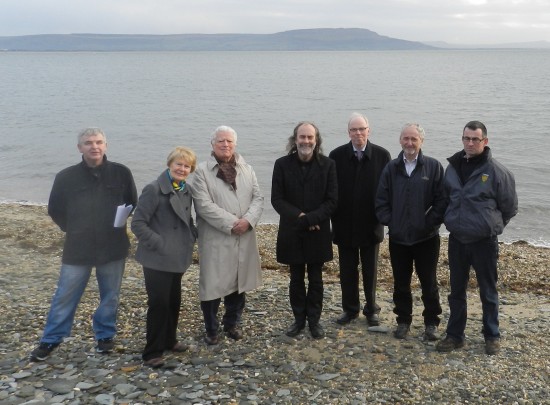
Glenburnie Beach, Moville, Inishowen, Co Donegal

Glenburnie Beach, Moville, Inishowen, Co Donegal

The European Commission could scupper Irish Water’s plan to build a controversial €13 million sewage plant next to Nobel laureate John Hume’s Donegal home

Hume’s wife Pat told this newspaper that the house at beautiful Glenburnie Beach in Carnagarve had been “a lifesaver” for her husband during dark times and the threat of the sewage plant had been “devastating”.

But a European Commission official investigating the matter has raised concerns about the way Irish authorities approved the project, according to correspondence seen by this newspaper. It is another potential complication in Irish Water’s task to end serious raw sewage problems afflicting 44 Irish urban areas.

The embattled state water company has planning permission from An Bord Pleanála for a sewage plant at the site on Lough Foyle to cater for a population of 8,800 in nearby Moville and Greencastle. But locals have fought for a decade to have the plant moved out of Lough Foyle to a site on the nearby Atlantic coastline.

John Hume and his wife Pat pictured in Derry earlier this year Picture: James Whorriskey

John Hume and his wife Pat pictured in Derry earlier this year Picture: James Whorriskey

“There is a horrendous problem with raw sewage going straight into the rivers,” said Enda Craig, who has led the fight. “People in Moville and Greencastle have to live with the smell and the rats so it is understandable some want it put anywhere at this stage. But Carnagarve Beach is beautiful and the wrong place for this.”

John Hume’s wife Pat agreed, describing Irish Water’s proposed solution as “shortsighted”.

“John and I are both getting well on in years but we think of our children and grandchildren,” she said, explaining they bought the house “after a very bad period” in 1987 when their house in Derry and two cars were firebombed.

“Very few people went to this part of Inishowen because you had to come through British army checkpoints so properties were very reasonable. It’s the best thing we ever did. It has really been a lifesaver. ”

“This is one of the most beautiful coastal pathways in Ireland,” she said. “To jeopardise it in any way is wrong and shortsighted. This magnificent shore walk is one of the big things it has to offer and it would be a terrible shame if it was jeopardised when other alternatives exist.”

Following the loss of a judicial review in 2013, local objectors took their case to Europe. They claimed a failure by the Irish government to transpose the EU’s Environmental Impact Assessment (EIA) directive into law had allowed the Donegal sewage plant to be granted planning permission ahead of the granting of an EPA discharge licence and proper assessment of the impact of a 300 metre long sewage outfall into Lough Foyle.

Irish Water said it is advancing the project to comply with wastewater regulations and a EPA discharge licence. It expects to tender the project in the next 12-18 months.

A Department of the Environment planning official dismissed the concerns in an email to Craig saying that “the Department understands that the EC [European Commission] is satisfied that the EIA Directive has been transposed satisfactorily in this regard.”

But a senior Commission official tasked with monitoring Ireland’s compliance with EU environmental law wrote last week in an email seen by this newspaper that “we are of the view that the EIA Directive applies in a case such as Moville in that an EIA screening process was required. We will be discussing this issue with the Irish authorities over the coming weeks.”

Saga

The email is just the latest twist in a saga that has run since plans were first put in place to build the plant in 1989. Following local consultation, a site outside the Foyle Estuary was eventually chosen in 2003.

But this was suddenly dropped two years later in favour of Carnagrave Beach, a site subsequently rejected three times by an An Bord Pleanála planning inspector. It is believed locally that the British crown still lays claim to the seabed right across the lough from Derry to the Co Donegal shoreline, which, objectors predict, could cause issues if construction proceeds.

In 2006 the Port and Harbour Authority in the area objected to the plant’s proposed 650-metre effluent outfall pipe running beneath the nearby busy navigation channel. But instead of abandoning the proposed site, the county council cut the outfall length to 300 metres. Objectors claim this greatly increases the risk of effluent being washed back onto the shore.

A hydrographic report prepared for Donegal County Council attempted to dispel this fear saying treated sewage would be pushed out of the mouth of the estuary by strong currents. But a senior oceanographer engaged by locals produced a report to say that the sewage, including raw sewage at certain times, would indeed be pushed onto the shoreline twice a day by the tide.

Meanwhile, locals applied to Donegal County Council to have Carnagrave Beach officially designated as a bathing location under EPA rules, possibly forcing the relocation of the plant.

But the local authority, which directed all queries from this newspaper on the project to Irish Water, refused to grant the bathing designation saying it preferred to allocate scarce resources to existing Blue Flag beaches in the county.

By Fearghal O’Connor Sunday Business Post Aug 9, 2015


The Campaign for a Clean Estuary in Inishowen says indications coming from Europe are that their challenge against a Sewage Treatment Plant at Carnagarve near Moville will be adjudicated on later this year.
It follows a Sunday Business Post report that EU officials have expressed concern at elements of the plan, and the way the location was determined.
Campaign spokesperson Enda Craig says this is potentially very significant………


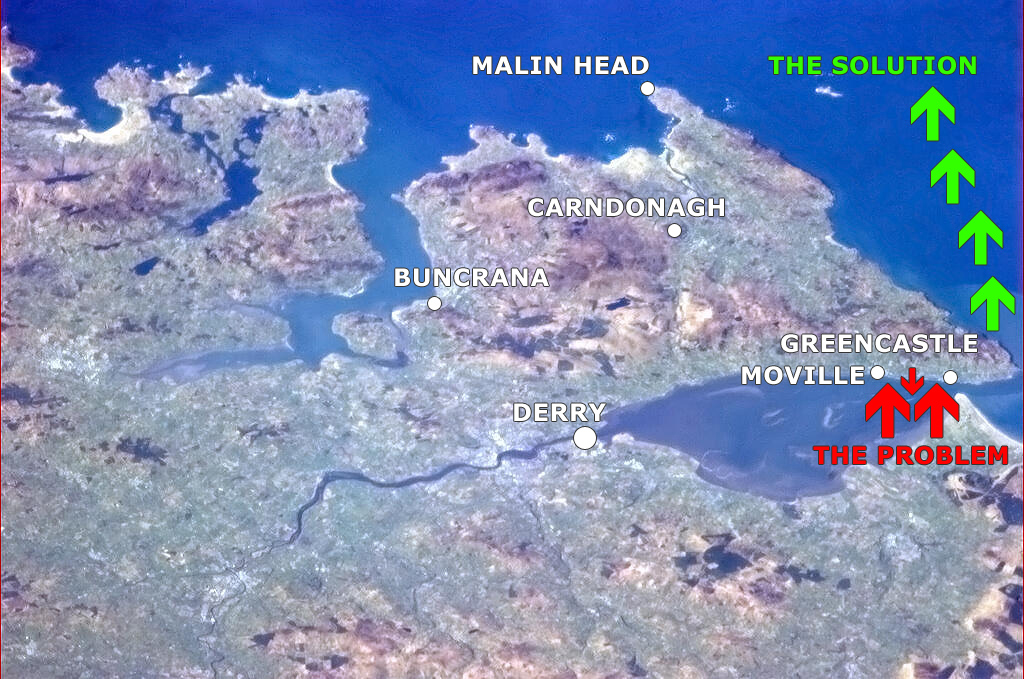
Save the Foyle THE SOLUTION
Click Image to go to Save the Foyle web page

Click Image to go to Save the Foyle web page

The sewage plant and pipe should go north of Greencastle (as was decided by council motion of 1990) where the effluent can be treated and discharged into the open sea. THE RIGHT PLANT IN THE RIGHT PLACE

Irish Water's credibility has truly dried up

Gene Kerrigan

Gene Kerrigan

Eurostat's hammer blow to the project has ministers reciting lines like their two-times tables

‘Eurostat does not oppose the Government’s aims – but it merely had to prod Irish Water for the whole fiasco to fall apart’

‘Eurostat does not oppose the Government’s aims – but it merely had to prod Irish Water for the whole fiasco to fall apart’


The Government has been caught out - Irish Water has failed the Eurostat test - devastating news for the members of the Cabinet. In deep, deep trouble, the Government responds with a mixture of guile, panic and outright denial.

For the past year, the Irish Water story has been presented overwhelmingly as one of loudmouth, know-nothing malcontents versus a responsible establishment. Yes, we were told, there are some teething problems with Irish Water, but the basic plan is sound.

Those who opposed the "new funding model" were a "sinister fringe". According to the Taoiseach, the opposition to his plans came from people who "don't want to pay for anything".

And, of course, the Tanaiste revealed - and this really is Ms Burton's level - that protesters have "expensive phones".

The image they sought to create was of a competent, responsible Government, unfairly hassled by ignorant people.

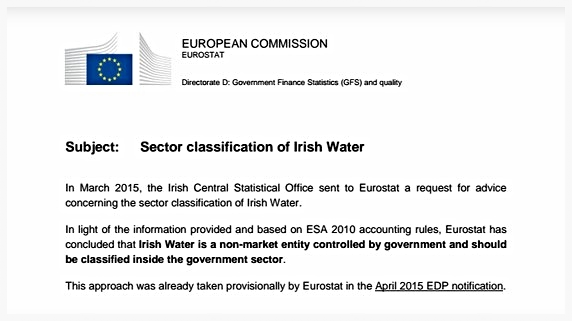
Last week, Eurostat comprehensively tore apart the whole Irish Water project.

It's important to stress that Eurostat doesn't oppose the Government's aims, it's not on the side of the protesters - it has no problem with water charges and privatisation. This was an objective appraisal, by a technocratic tool of the EU. It wasn't looking for faults - it would have been happy to give the project a positive review, if at all possible.

It merely had to prod Irish Water for the shambles to fall apart.

Irish Water was since 2009 a Fine Gael pet project that ticked several boxes. The water tax would produce a revenue stream in the short term. The nominally "independent" company would be state-funded, to fix the leaks at our expense. And in due course it would tick the box marked 'Privatisation', and the public water supply would be sold to a private gambler.

Creating a database of customers, complete with PPS numbers, would have made it a desirable product for sale to those with the millions to buy such public assets.

It was the kind of project that gives good little right wingers wet dreams.

The hundreds of thousands of people who opposed the water tax - who campaigned, who demonstrated on the streets, who refused to pay - had various reasons for their opposition, but had no doubt about the damage Irish Water would do.

They saw a double-tax mechanism, part of the array of austerity measures, which would take a public asset, repair it at our expense, doll it up and eventually sell it to a consortium of the usual suspects. And the opposition to Irish Water held firm, despite threats, bribes and insults.

The protests forced the Government to cap the charges, and forced a retreat on PPS numbers. They even promised not to privatise - we didn't believe them, but they were forced to make the gesture.

Finally, courtesy of the fascinating mind of Minister Alan Kelly, the Government came up with a bribe - a €100 "conservation grant", just for registering with Irish Water. The name was a sham, there was no mechanism for conserving water. If you opened your taps and left them running 24/7, you'd still get the €100. All they wanted was to bulk up the numbers they could claim were registering.

In all the farcical stuff that's gone on, has there been a more gratuitous misuse of public money?

The only way Eurostat could approve Irish Water was if the fix was in, if Eurostat had been got at by someone high in the EU. "Ah, lads, Enda and Joan have followed ECB orders, and it's only fair to help them preserve an image of competence in the run-up to the election."

But Irish Water is such a disaster that a fix wasn't feasible. The Eurostat review shows an "independent" company that's wholly controlled by the Government, poorly organised, and a drain on the public finances with a make-it-up-as-you-go-along business plan.

The political dilemma this creates is the politicians' problem. The fact that they've squandered hundreds of millions of euros is ours. They've tied the State into expensive contracts - and the result is a fiasco that will drain the public purse for years, to no good purpose.

The government response to the Eurostat rejection seemed rehearsed. Those who spoke used similar phraseology. Michael Noonan was, as you might expect, best at diverting attention from the disaster.

He drawled that to pass the Eurostat test Irish Water needs 50pc of its revenue to come from selling its product, and that figure is already 48pc, so it's well on its way.

That's nonsense.

The revenue sources - state and commercial - is one aspect of the report. The entire structure was slated by Eurostat. Irish Water couldn't have been shoddier if a crack squad from the last Fianna Fail government put it together.

Another minister, Paudie Coffey - who sounded about half a decibel below panic level - said the Eurostat report was "marginal". More nonsense. He kept repeating little phrases - "cards on the table", "prudent governance", "there is no alternative" - like a school kid reciting times tables.

Is this a thing now, in public life? It's most noticeable with Enda Kenny, who memorises slabs of prose and uses them to waffle his way through interviews and Dail appearances, regurgitating his rehearsed points regardless of the question he's asked.

Last week we had the extraordinary sight of the CEO of a bank explaining that he wasn't to blame for serious overcharging that shattered many lives. And that's not to mention those who lost their homes because of the overcharging.

And on the front of his script, to ensure he presented himself to best effect, was the scribbled reminder that he should appear "serious, controlled, no smile".

Is public life entirely in the hands of robots, who can't function without rehearsed scripts and stage directions?

Listening to ministers parroting one another suggests it is.

(By the way, Alan Kelly said the Government is "working through the CSO to challenge" Eurostat. This suggests ministers will seek to influence Eurostat using the Central Statistics Office as a front. Can someone from the CSO please point out that politicians have no business "working through" a body that cannot properly function without unquestionable independence?)

Where does it all go from here?

Kenny and Burton won't back down. It would hurt their image, with an election coming up.

On the other hand, to get Irish Water past Eurostat they'd have to reorganise the company's workforce and its funding. They'd have to cut out the bribes.

They'd have to greatly increase the numbers of people willing to pay.

They'd have to dismantle what Eurostat calls their "exceptional" control of the company.

They'd have to immediately dismantle the alleged safeguards against privatisation - which would be easily done, but would expose their longer term aims.

Someone in the ECB might decide it's simpler to have a quiet chat with Eurostat.

Everyone involved in creating this mess, from Phil Hogan to Alan Kelly, from Enda Kenny and Joan Burton to the Irish Water executives - plus the top civil servants and the rest of the cabinet, who waved all this through - they're all on a cushy number. Bloated salaries and obscene pensions.

We, who are insulted and sneered at as the ones who "don't want to pay for anything", will of course end up paying for bloody everything.

In the months to come, these people will tell us we have to vote for them. Because, unlike those wild left wingers on the independent benches, they are serious, competent and responsible people.

Original article Irish Independent