
Anti Water Campaign Broadsided amid Dail doldrums

In these days of political intrigues in Ireland when media sleuths are waiting to pounce on controversy,  is it politic for an organisation's main spokesperson to air personal views without consulting the organisation?  Would that be considered correct or professional?  We know in times of political strife a tactic is sometimes used to sound out public opinion. Perhaps that is acceptable in the political arena but in a public campaign with multi party support and built on camaraderie,  then making a personal statement without consulting other members beforehand may not have been prudent.  
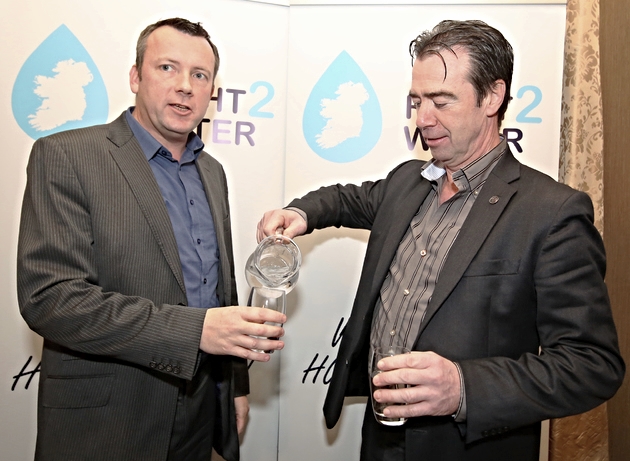
Brendan Ogle, Unite and John Douglas, Mandate.  Mr Ogle is spokesperson for Right2Water affiliated trade unions.

Brendan Ogle, Unite and John Douglas, Mandate.  Mr Ogle is spokesperson for Right2Water affiliated trade unions.

Last Thursday, April 14, Brendan Ogle, spokesperson for Right2Water affiliated trade unions, made a personal statement on his Facebook page calling on all Dail TDs who support the anti water charge campaign to vote for a Fianna Fail minority government.   

"I (unusually) had the time today to follow every word of what happened in the Dail and one thing is crystal clear to me, more than ever.
There is an opportunity to elect a FF minority Government that will abolish Irish Water and, if they break that promise, the plug can be pulled by those outside FF at any time.

I have received emails from politicians saying that nobody should trust FF. They are spot on. I don't. But I am not in any party precisely because not only do I not trust FF, but because I do not trust any of them.

Lack of trust however should not be a barrier to doing business. I have concluded many collective agreements with employers over the years and the hard fact is I trusted none of them either. But even without trust agreements had to be made and they were mostly honoured.  

In my view it isn't. An agreement can be reached that will abolish Irish Water and if it isn't delivered by the biggest part then, in a minority Government situation, the plug gets pulled and those who broke theircommitment exposed in an inevitable election then. But put it up to them. It may be that behind the scenes a political judgement is being made that it suits this group or that groups long term strategic interests to just keep going, regardless of Irish Water, and not form a minority Government to abolish Irish Water and charges now. If that is the case then that is a political strategic objective that may well be legitimate in that party or alliance "  Read full statement here.

Campaigners taken by surprise

This unilateral statement has caused quite a heated debate on his facebook page and among the  anti water charge movement in general.  It  has taken  seasoned campaigners totally by surprise.  

Fianna Fail as everyone knows is a right wing Irish party who were in government at the time of the 2009 financial crash and subsequent bank guarantee which the Irish Mirror described as "Ireland's €440 billion bank guarantee was the most destructive own-goal in history, a banking expert has told an Oireachtas inquiry."

The Irish General election took place on February 29th, 2016 and still there is no government in place , with parties in negotiations to form what looks to be some type of minority government.  What is looking more likely, at present, is a minority with Fine Gael, (50 seats),  doing a deal with the second largest party Fianna Fail, (44 seats) along with possible support from some Independents and the Labour Party, (7 seats).  In this scenario Fianna Fail would get some of their policies implemented  in exchange for committing their support to a minority Fine Gael/Ind/Labour government for a fixed term. 


Call is an error and should be dropped according to campaigners.

Cllr Brendan Young

Cllr Brendan Young

Cllr Brendan Young and Mr Pat Waine, long time anti water charged campaigners and Right2Water activists, spoke out against Mr Ogle's statement.  

Mr Young said "Controversy has unfortunately arisen in the movement against the water charge. The main spokesperson for R2W,  Brendan Ogle, has publicly called for TDs, who oppose water charges (some or all of the TDs of the Left, or SF, SDs or Independents) to elect a FF minority government that would abolish IW.

There was no need to make such a call.  Mr Ogle could simply have called for pressure to be put on FF and Independents and parties to vote for a Bill to abolish IW and  water charges, whether or not they vote for a FG or FF minority government.  Indeed there are currently discussions taking place on the drafting of such a Bill. There could also be a meeting called to discuss other actions to put pressure on TDs, including the possibilities of mobilisations, non-payment.

Mr Ogle is mistaken in saying that electing a FF government is similar to a trade union making an agreement with an employer. A trade union that makes an agreement with an employer does not take on to impose cuts on other workers. But a TD who elects a FF (or FG) government would be taking responsibility for continued austerity in exchange for abolition of one charge.

Any TD who did this would be abandoning the fight against austerity, betraying their supporters and – like Labour – would never be trusted again. Surely UNITE members would not want TDs who declared opposition to austerity to let FF get on with it unopposed?

Pat Waine

Pat Waine

I think this call to elect a FF government is an error that should be dropped."

Pat Waine and I have convened a meeting at 1pm in the Teachers Club, Parnell Sq, Dublin on April 16 to discuss the current situation and how to take the fight forward. While we have differences with others in the movement, we think we should all work together to enforce the abolition of the water charge."  Read Mr Young's full statement here

The proposed meeting took place last Saturday and Mr Young said that a statement and press release will be released on Wednesday.

To date there has been no official statement on the issue from Right2Water affiliated trade unions.

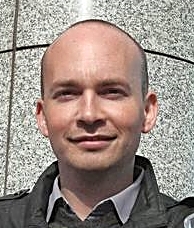


National Assets Management Agency to recover only €34.1bn on developers debts of €74bn it acquired

Last Thursday  Michael Noonan, Finance Minister, replied to a question in the Dail from Paul Murphy, AAA/PBP, about the final amount which the National Assets Management Agency is expected to recover on its debts relative to the €74 billion of loans it acquired and the amount recovered to date by year. 

 Mr Noonan replied that  "NAMA originally paid €31.8 billion to acquire a €74 billion loan book, comprising of 779 debtor connections. I am advised that, as at 31 March 2016, 442 debtor connections with a par debt of €18.5 billion had exited NAMA. This comprises debtor connections that reached a final agreement with NAMA and debtor connections whose loans were sold. 44 debtor connections have repaid their par debt in full. I am further advised that the 442 debtor connections have repaid €9.6 billion to the Agency.

Mr Paul Murphy  explained Mr Noonan's reply in his facebook page

Paul Murphy AAA/PBP

Paul Murphy AAA/PBP

"The scale of the write-off illustrated by these figures is immense. The fact that of 442 debtors exiting NAMA, only 44 debtors have paid their debts in full proves the fact that NAMA has been used as a life support machine for developers and an agency for bailing them out.

With a collective 398 debtors having had €8.9 billion in write off, that means an average write-off of over €24 million for each developer, at a time when ordinary mortgage holders and tenants of repossessed buy-to-lets are being made homeless. To cap it off, the state isn’t even ending up owning these debtors’ properties but has been selling them on to vulture funds whose business model is to make a 30% profit in three years – another potential loss to the taxpayer in effect.

The answers also state that NAMA expects to make a €2bn ‘surplus’ relative to the €31.8bn it paid for the loans with a par value of €74.1bn. In other words, by the time it winds up it will have written off €40bn in debt - €8.9bn has been written off so far, leaving €31bn to go. At the time NAMA was set up, then Finance Ministser Brian Lenihan promised that the developers would be pursued for every penny they owed. Now we’re supposed to swallow a €40bn loss as a ‘surplus’ or profit.

Instead of being this life-support machine for developers, NAMA should be democratised and transformed into an agency to deliver social and affordable housing, using, for example, the over 1,100 hectares of residential land NAMA controls in Dublin alone – enough for up to 110,000 homes."

see Oireachtas debate: Thursday April 14, answers 72-75

Mick Wallace, Ind,  speaking in the Dail on April 14, on Housing Crisis, NAMA and Vulture Funds.


To Journalists

The opening address at last week’s Journalism In Times Of Crisis conference at the University of Limerick was given by Gemma O’Doherty.

Gemma was fired from the Irish Independent while investigating the quashing of then Garda Commissioner Martin Callinan’s penalty points.

Gemma O’Doherty at the University of Limerick last week

Gemma O’Doherty at the University of Limerick last week

“I’d like to thank Henry Silke and University of Limerick for organising and hosting this important conference. Reporters who work at the coalface of investigative journalism in Ireland need the support of our colleagues in academia, especially when it is so lacking within the media itself.  These are very difficult times for journalism in Ireland.

Those of us who investigate corruption in public office make ourselves and our sources extremely vulnerable to those in power who would intimidate us, monitor our activities, threaten our safety and try to silence us.  In return, we receive almost no support.

We work in an era where a culture of fear and timidity stalks many of our newsrooms. It has bred a generation of journalists who behave less like dogged agents of the public interest and more like compliant diplomats and spin doctors constantly looking over their shoulders and towing the party line.

They have forgotten or chose to ignore the true function of our still noble vocation: to hold power to account, to comfort the afflicted and afflict the comfortable, to defend the public’s right to know, to seek the truth and report it.

In this new media landscape where many Irish journalists can no longer do their job without fear or favour, the greatest loser is democracy. A robust, independent, adversarial press is the lifeblood of a functioning democracy and a free society.  In Ireland in 2016, we have nothing close to that.

When Enda Kenny came to power in 2011, he promised a new era of integrity, accountability and transparency. But as a journalist, when you ask questions of a state press office, you hit a brick wall, more often than not.

I would argue that press freedom and the ability of the media to hold power to account is more compromised today than at any other time in the history of the state.

This has no doubt contributed significantly to the crises we have in policing, health, housing and water services.

This new era of cowering journalism has come about largely, but not only, because so much of the media has been allowed to fall into the hands of so few.

The fact that many of us now refer to the biggest owner of Irish media as ‘Redacted’ speaks volumes. One big voice has far too much power and prominence in our small country.

Not all media moguls exert the chilling effect that some do over their newsrooms. I spent most of my 17-year career at INM working for Tony O’Reilly. He invested in decent journalism and good writers. He understood newspapers, and while he was not perfect, by and large he left editors to get on with it.

And then there is Denis O’Brien.

Denis O’Brien, who attempted to bring in a so-called journalists’ charter that challenged the right and duty of reporters to engage in adversarial journalism.  

Denis O’Brien who was reported to the United Nations for making legal threats against journalists.

Denis O’Brien who last year managed to silence most of the Irish media from reporting a speech in our parliament.

Denis O’Brien who threatened to sue a website whose sole purpose is to engage in satire, that most precious form of free speech.

Is it healthy for democracy that someone who takes such an interest in silencing our right to speak be in control of so much of our media? I don’t think so.

I don’t make any distinction any longer between RTÉ and the O’Brien-owned media. If anything, I would hold more disdain for the state broadcaster because it is failing its public service remit so blatantly and really does deserve the name it is more commonly known as on social media: ‘RTEBIAS’.  It seems to disregard the fact that it is accountable to the public who pays so that it may exist.  There are so many examples of this, it has almost become the rule rather than the exception.

We saw it in its often farcical coverage of the general election which undoubtedly affected the final poll; in its bizarre reporting of the Mairia Cahill case, Slab Murphy and the Special Criminal Court; in its failure to cover allegations about Finance Minister Michael Noonan and his role in the foster care scandal; in its refusal to cover cases of gross corruption in our garda force including the cover-up of children’s murders.

There is no doubt that a culture of institutionalised complacency now dominates RTÉ where some presenters earn more than David Cameron and Barack Obama, and certain journalists see themselves as celebrities, appearing on the cover of Hello-style magazines and red carpets in designer dresses.

When they are not interviewing each other, they’re rolling out the same clique of voices and seeking to rehabilitate people who’ve been disgraced in the public eye.

At the time of my firing, I was immersed in many stories about corruption and wrongdoing in the criminal justice system. I was working with bereaved families whose loved ones had been killed in violent circumstances.

These families were alleging grave wrongdoing in the gardai but when they approached certain journalists in establishment outlets, they said their cases were not being taken on board and they got the cold shoulder.  In most cases, their stories were compelling but the families were left with a sense of abandonment that the very people who should have given them support failed them.  In doing so, they also failed the public interest.

One of the cases I’m investigating is that of Mary Boyle.  Ireland’s youngest and longest missing person was six when she was murdered during a visit to her grandparents’ remote farm in Donegal in 1977.  The authorities have failed to bring the chief suspect to justice amid allegations of garda corruption and political interference in the case.  In March, her twin sister Ann and I visited the US Congress to lobby for justice for her as that door has been firmly shut here.

Despite countless requests to RTÉ to cover this important visit, they refused to inform the public about it over the airwaves.  Was this out of fear that it might bring the Phoenix Park into disrepute and shine a light on corruption in the gardai? One has to wonder.

 So what is the effect of an obedient, cowardly media on society?  Joseph Pulitzer once said that a cynical, mercenary press would in time produce a people as base at itself.  There has certainly been an attempt by some segments of the media to dumb down the population, and when citizens start to challenge authority and engage in dissent, they refuse to report those challenges fairly.  A vivid example of that has been the bizarre coverage of the Irish Water movement and the so-called ‘sinister fringe’.

 [This] week, a journalism conference in Kerry will be opened by Noirin O’Sullivan who has presided over a litany of scandals in her time as Garda Commissioner. Joan Burton and Frances Fitzgerald are among the other speakers. That really says it all.

 We need to smash the cosy cartel that exists between the press, power and the police in this country because it is so damaging to the public good.

I would like to mention some notable exceptions in the Irish media who do try to prioritise the interests of democracy in their journalism: The Sunday Times,  IrishExaminer, Irish Daily Mail and Irish Times, and, of course Broadsheet and Phoenix.

But trust in media is understandably on the wane because the public know that so many of the issues that matter most to them are being skewed or ignored.  However, there is a bright side to all of this. This is a very exciting time to be a journalist.

As many traditional newsrooms become more focused on protecting plummeting revenues and their friends in power, investigative journalists are finding new ways to tell stories and release information and high quality content into the public domain by cutting out the middle man.  The internet has been our greatest resource in this regard.  In my own area – corruption in the criminal justice system – we have seen how documentaries like ‘Making A Murderer’ can have such a huge impact and do a lot of public good in the process.

Publicly-funded investigative websites are beginning to challenge old media where editors hold off running stories for fear of upsetting the establishment and denying the public their right to know.  Here in Ireland, a team of our finest investigative reporters have set up a new website called Righttoknow.ie to push for transparency and accountability in public life.

We must embrace this change and realise it is for the betterment of our profession and society.  But we also need to start looking at our media colleagues and asking how the journalists of the future will protect the public interest. Will they be boat-rockers who challenge authority and dig until they get answers? Will they have the tenacious rat-like cunning that proper editors once demanded of their reporters? Will they chase yarns as if their lives depended on it?

Hopefully all of the above but it is the job of our universities to nurture those characteristics in them.  I’ll finish with the words of Joe Mathews, a former reporter with the LA Times, when he spoke about how the public interest was so endangered by the crisis in journalism.

‘Much of the carnage of the ongoing media industry cannot be measured or seen. Corruption undiscovered. Events not witnessed. Tips about problems that never reach anyone’s ears because the ears have left the newsroom. With fewer watchdogs, you get less barking. How can we know what we will never know?’

Our profession is on its knees, but it is worth fighting for. We have a duty to fight for it. We need to stand up for courageous journalism whose primary focus is the public interest.  We need to read it, to buy it, to support it, because without it, the health of our democracy will remain in terminal decline.”

Original article: Broadsheet, Apr 12, 2016