The Emerald Isles' pure clear waters are swimming in carcinogenic Trihalomethanes

In relation to this week's revelation in several national newspapers that Trihalomethane is present in water supplies throughout Ireland,  Yeat's poem 'The Song of Wandering Aengus' springs to mind.  Instead of the trout turning into ' a glimmering girl with apple blossom in her hair', the trout turns into a lethal carcinogen.
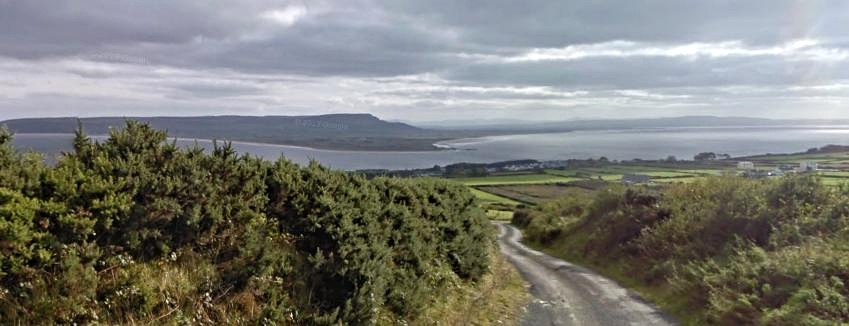
View of Greencastle and Lough Foyle with Magiligan Head in background

View of Greencastle and Lough Foyle with Magiligan Head in background

This is not meant to be flippant but how else can one view this recent health bombshell?  It is even more sinister since the facts have been known for several years, (at least since 2010),  by our illustrious administration.   Not one local representative, not one official has thought it worthwhile to investigate or inform their community.  

Donegal Affected Areas
You can download full EPA Drinking Water Remedial Action List Q4 of 2015.  In this you will see Donegal areas highlighted for THM failure (Trihalomethanes), areas include Gashard, Fintown, Greencastle, Pettigo, Portnoo, Rathmullen.  Also mentioned for Donegal are areas lacking in Cryptosporidium barriers; Glenties, Kilcar, Cresslough and Letterkenny.

This is awful news, however,  the worst part is that it is not new.  It was highlighted in a local Donegal online newspaper http://www.donegaldaily.com/2014/11/20doctor-says-towns-water-supply-is-not-fit-to-drink, onNov 20,2014.

Not only that but it was published in 2010 in EPA reporthttp://www.epa.ie/pubs/reports/water/drinking/Drinking%20Water_web.pdf,   This indicates that it was known to the EPA, and HSA as far back as 2010.

Also highlighted in the report were problems with other chemicals including lead, and microorganisms i.e cryptosporidium.  

Where has the outcry been from our political representatives, local and national? Where has the outcry been from all our health officials and county administrators?  It is now 2016 and still the communities are unaware of the potential hazards. 

EPA Minimising Risks
There is a couple of other interesting things in the above EPA report that need highlighting.   One does not need to be a scientist to see subtle misrepresentations such as in explaining Trihalomethanes, para 2.4.3, the report says

“THM failures are caused by the absence of adequate treatment to remove organic matter (THM precursors). Trihalomethanes are formed when chlorine reacts with naturally occurring organic matter in raw water”


However, in http://des.nh.gov/organization/commissioner/pip/factsheets/ard/documents/ard-ehp-13.pdf it states

” Trihalomethanes are a group of organic chemicals that ofter occur in drinking water as a result of chlorine treatment for disinfectant purposes and therefore are also known as 'disinfection byproducts' or DBPs”.

Do you see the subtle difference?

The EPA report, para 2.4.3 again is downplaying the significance of the carcinogenic properties of trihalomethanes

“Trihalmomethanes are formed when chlorine reacts with naturally occurring organic matter in raw water. Chloroform and bromodichloromethane (two of the four THMs) are classified by the International Agency for Research on Cancer as a ‘possible carcinogen’. The Committee on the Toxicity of Chemicals in Food, consumer Products and the Environment (COT) (UK) systematically reviewed the evidence with regard to THMs and cancer in 2008 and stated “Problems remain in the interpretation of published studies. These include the small relative risks recorded, the possibility of residual confounding, and the problems with exposure assessment” They concluded “the evidence for a causal association between cancer and exposure to chlorination by-products is limited and any such association is unlikely to be strong”

Do you see what I am trying to get at? Even today the EPA is picking and choosing reports and scientific facts in an effort to what can only be construed as risk minimisation. Why?
 

Authorities Not Obliged to Inform Public
You would be hard pressed to find any information in the report obliging authorities to inform the public about potential dangers to their health.  Apart from mention of ‘boil notices’ there isn’t anything statingthat the public have a right to know, especially in the case of Trihalomethanes.

The 2011 EPA report, para 3, states ” 200 of the original 339 public water supplies placed on the EPA Remedial Action List (RAL) have completed the necessary action programmes and have been either replaced, upgraded or have improved operations. Three WSAs did not provide an estimation of the timeframe for completion of remedial actions for 12 supplies, 10 of which were in Donegal.”

Same paragraph “ All WSAs were found to be publishing some or all of the microbiological, chemical and indicator monitoring data as required by the Ministerial Direction on the publication of drinking water results. However, many WSAs are not publishing this information within one month as required. Six WSAs (Galway, city and county, Kilkenny, Limerick, Meath, North Tipperary) were found to be in full compliance”

This would imply all others not mentioned were not in compliance. When EPA says ‘publicising result’, what do they mean?  Are these results, or it seems ‘ partial results’ so obscure that even our elected representatives are not aware of them? 

Surely the public has a right to know, to be informed what they are consuming, the potential lethal consequences of consuming carcinogenic drinking water?  Should we not have a right to expect that everything is being done to protect our health?   Should it not be mandatory for all personnel and official bodies, scientist and engineers,  employed to monitor and research , to make it known to the public without trying to minimise the hazards?  Surely they know and have known since 2011 and beyond.  Still people in 2016, in Greencastle and elsewhere in Donegal and nationally are drinking contaminated water.

What this 2011 report shows, together with the more recent EPA 2015 report, is that all is not as transparent as they would like us to believe and it seems that the welfare of citizens is not regarded as first priority .

Related Articles

Irish Times, Feb 17, 2016
Irish Examiner, Feb 17, 2016
The Liberal.ie, Feb 17, 2016
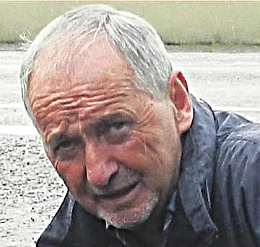

Enda Craig

Enda Craig

An Inishowen environmentalist has hit out at Irish Water for what he termed a lack of information about excessive chemicals and contaminants in some water supplies.

Highland Radio, Feb17, 2016

Enda Craig of the Campaign for a Clean Community was speaking this week after it emerged that one of the exceedents in the Greencastle supply is a chemical which has been linked with some cancers.

Mr Craig says Irish Water are promising a new supply by 2017, but he believes this could be rectified immediately by switching Greencastle to the East Inishowen supply.

He says this is an issue which needs to be prioritised:


It never happened - again

Main article- 'It Never Happened - Again' by Anthony McIntyre, foreword by James Quigley

Sinn Fein are riding high (depending on what poll you read), in the run up to the Irish general election on February 26, 2016. They are fluctuating from 19% to 21%,  putting them in second place behind FG at 29% see digplanet polls.  However, they know that at the end of 2014, at the height of the water/austerity demonstrations, they were the most popular party, see rte.ie article

Sinn Fein's slick, well honed party machine is now in full swing in the run up to the general elections. They will be trying to attain the heights of 2014 and it looks like they are zoning in on the massive anti water charge and austerity vote.  Sinn Fein's dedicated and controlled party members have been trying to persuade the Irish public for years that they are a 'responsible' and 'believable' party with well costed policies.

Well maybe not so well costed as this RTE Radio 1 programme, 'This Week', an interview with Gerry Adams, Feb 14, might indicate.

When a politician starts saying 'Let me be clear' and talking about a mandate, that is like a rag to a bull and when the same politician makes election promises,  you just have to say, 'pull the other one'.

Yea just like all the broken promises we have heard from Fine Gael, Fianna Fail, Labour Party and the Greens, in fact since the foundation of the state.  So will Sinn Fein's promises be any different?

Yea, sure we can trust them.  Just like Sinn Fein's record in Northern Ireland where they administer British rule and austerity measures. Gerry Adams has refers to their record in Northern Ireland quite a lot.  It is probably to give the impression that Sinn Fein is a responsible, law abiding party who can be relied on to take the reigns of power.

      Gerry Adams, Sinn Fein leader

      Gerry Adams, Sinn Fein leader

However, there are quite a number of Republicans, socialists and public in general in Northern Ireland who would questions Mr Adams assumptions about their record there.

Another assumption, as mentioned by Gerry Adams in RTE's This Week, that they are a party of the working class or a party for 'ordinary people', dedicated to liberty, equality and fraternity would raise a few eyebrows.  Again a debatable point and one an awful lot of people would have contention with.

Could Mr Adams spell out, how Sinn Fein's record in Northern Ireland has championed the working class? And as for an 'United Ireland', could he tell us how this is going to be achieved especially in the light of the Good Friday Agreement?

And again but not least, how is he going to attain the goals of sovereignty and freedom as part of the EU especially with the IMF and ECB banking vultures looking over his shoulder?   Will it be something like the Greek SYRIZA capitulation, where they promised one thing but done the complete opposite.

Sinn Fein track record should be scrutinised

It is the track record of the Sinn Fein party and Provisional IRAthat should be highlighted and scrutinised.    It is the emphasise that the party puts on control and party growth by any means that should be questioned.  Especially now in the run up to the general election. 

Some would say that Sinn Fein was cementing party control by any means and that they were on this parliamentary trajectory even as far back as the 1981 Hunger Strike.  For sure they have been on the parliamentary road ever since the Provisional IRA ceasefire in 1997 (some would say 'defeat')  or the Good Friday Agreement 1998 (some might say 'sell out').

Buncrana Together has written extensively on Sinn Fein's record locally in the Irish Water Campaign, the way they treated locals and it's influence or control in the national Right2Water movement, see our article A Critique. Donegal A Microcosm of the Malaise affecting Right2Change Ireland.  It's a long article so suffice to say that their involvement was one geared towards the party, to power and control and nothing would get in their way.


However, we will leave it to Anthony McIntyre to give what we think a great and eloquent depiction of Sinn Fein's modus operandi set in the context of Provisional IRA decommissioning weapons .  A modus operandi that has to be written about and investigated, not least because truth must be upheld at all costs but also because of inherent dangers in the power of a party which has 'control' as it's centre core.  It could be argued a little bit like National Socialism.


Anthony McIntyre's article 'It Never Happened – Again'   first appeared in The Blanket and was recently part of a collection of stories in his book 'Good Friday, The Death of Irish Republicanism',  Ausubo Press, 2008. 
If you want a book that hold's truth and honesty dear, if you want a book that gives an insider's, alternative account of Irish Republicanism, if you want a book that you can not put down then read his book. If you want a taste of his brilliant writing then read on.


It Never Happend -Again

Anthony McIntyre, 9/4/2002

What would never happen has happened again. The strategy of 'never but will' trundles on oblivious to the silent well of sensitivity and layers of sacrifice abandoned as mere backwash in its wake. The IRA has opted for another for a further round of decommissioning and has effusively praised itself for having done so. According to Republican tradition that such an action has occurred but like many other 'truths' on republicanism a mythological virus has crept into the account and it has nudged into the shade the evidence presented by County Inspector Gelston of the Clare Royal Irish constabulary who, when giving his evidence to the Royal commission of Inquiry investigating the events of Easter Week 1916, informed it that 'in one case a parish priest addressed the Sinn Feiners and asked them to give up their rifles to us. That was the only case in which rifles were given up to any extent'.

There will be those in the Republican leadership who will in the days ahead troop around the Republican family meetings in West Belfast and elsewhere to perform a little pirouette of prevarication.

They will tell anyone who will listen that nothing was decommissioned, that De Chastelain – who yesterday in a Freudian slip described how he wished to 'recapitulate' again – made it all up; London, Dublin and Washington went along with it to keep the peace process alive. There are even some who will swear to having been there when decommissioning didn't happen – again. 'Honest, that's the second time I saw it not being done'.

A common thread running through the queries of observers, somewhat perplexed at the incredible ease with which the bulk of Republicans accept what would only recently have occurred over their 'dead bodies', is whether there really is anybody other than the 'terminally stupid' within the Republican base who believe such nonsense. But this is to come at it in the wrong way. No one should be so arrogant as to presume that the entire Republican grassroots are gullible fools. Yes, as elsewhere, there are those, a la Sean O'Faolain, who labour without 'a spare sixpence of an idea to fumble for'.  And their numbers are indeed reinforced by fawning acolytes who know better than to believe any of it but who, wanting to maintain what power they have by dint of being apparatchiks, seek to emulate Lord Coppers's sycophantic gofer in Evelyn Waugh's Scoop who remained incurably anxious never to contradict his boss. Yet there are others who are disgruntled but 'pragmatically acquiesce' out of a sense of impotence, concluding that the leadership have it all sown up and that open opposition will only bring the green shirts to their door.

Even in the middle level bureaucracies – a comfortable home in every organisation for the flunkeys and sycophants who disproportionate populate the functionary niches – there are to be found some who steadfastly refuse to celebrate what only the week before they condemned; who are not to be seen tearing through the dictionary in search of new ways to say 'courageous and imaginative'; who make no pretence that patriotism is a synonym for surrender; and who will run a million miles from humiliating Mexican waves aimed at pleasing U.S presidents who have just signed the latest cheque for the child-murdering Israeli government. But even if they never read him nor heard of his name they are instinctively alert to the perception of Alexis de Tocqueville that people are more afraid of being marginalised than of being wrong. Experience has left its mark. Those who wish to think differently learn quickly that critical questioning can lead to social suicide. Ostracism is a powerful tool carefully honed to exert maximum pressure upon those who decline to conform. For the place seeker with ambition, leading the mob of social banishers may help improve the political career CV. There is no shortage of would-be councillors to be found when it comes to waging campaigns of intimidation against those who speak out. And to add sinister muscle the 'Kray Twins', Mug & Thug – the leadership's thought police – are all too will to visit homes and ominously wag the trigger finger.

So, at best the stupid thesis remains unproven, at worst demeaning. It is more credible to contend that the grassroots have been subjected to a prolonged campaign of attrition strategically designed to intellectually cauterise them by managing and filtering information. Advised not to listen to or, worse, speak with the 'enemy press', the bulk of their take was formed by what the leadership – who have no qualms about speaking to the 'anti-Republican media' – tell them.

That Leadership, inebriated on the arrogance of power, rarely managed to conceal a rabid hatred of anyone disagreeing with it. Committed to zero tolerance of alternative viewpoints it ensured the Republican movement would be a cold house for other voices. Even in supposedly democratic Sinn Fein, the hidden centre of power in republicanism – the prosperous men of the Army Council – sought to rule the party with the ethos of the army. Under its domination, dissent - initially promoted by it for its own sectional ends against O'Bradaigh/O'Conaill axis – was viewed as a contagious disease. Those who displayed the symptoms were quarantined by being either marginalised out of the movement entirely or banished to some remote corner within it. Heads raised above the parapet would immediately draw the attention and surveillance of thought traffic control and the fire of the verbal snipers, their weapons loaded with vitriol, eager to impose silence and prevent republicanism from becoming more democratic.

For long enough most could be expected to acquiesce in this, given that there was a war to be prosecuted that helped generate an imperative to protect the struggle from anything that could be presented as divisive. There was an acceptance that the civilian values of democratic rights and equality had no place in an army. Hierarchy was what was needed – and plenty of it. Those at the top sought to dangerously totalise intellectual life. And that fierce self-serving ambition of leaders to empower themselves while dis-empowering followers was best served by suppressing any sign of independent thinking, which might lead to a rupturing of the banks of conformity and an irrigation of that barren terrain where previously little in the way of new ideas sprang to life.

Yet when the war wound down matters did not improve. With no obvious need to consent to leadership demands for quiet, the institutional imperative for self-preservation kicked in and leaders coerced silence. Consequently, dissenting views were ignored or explained away through the illogic articulated by the hounding hacks. Those who believed that the leadership would sign up to a partitionist arrangement, no different from Sunningdale describe strategic failures as new phases of struggle, invent idiotic phrases like ' a transition to a transition', sit in Stormont, join centre-right coalition governments north or south, administer British rule, accept the consent principle, settle for no abolition of the RUC, endorse a new status as an establishment party, criminalise the armed struggle of other physical force groups, murder members of alternative Republican organisation and decommission weapons, were dismissed as mentally ill, alcoholics, whores, self-publicists, and egotists. If a party member opposed to the leadership strategy drank three nights a week they were automatically consigned to the doghouse. Strangely, though, if on the other hand, your tipple ran to thirty-one days a month but you supported the strategy, you could cruise comfortably at leadership level, even arriving to speak at commemorative events blocked.

A regime of truth was being constructed. It didn't matter if it was all false – just that people believed it to be true, or at least, said as much. And yet the pervasive culture of conformity has failed to subdue everyone. There are still Republicans both inside the movement and without who reject and resist the repressive concept of Section 31 regardless of who wields it; who remain determined that a sanitised and revisionist account shall not monopolise the historical record; who feel they have every right to ask the difficult question. Why should we have to rely on the probing of Seamus McKee, Noel Thompson, or Mike Nesbitt to elicit answers that make the leadership look foolish and fumbling, seeking the cover of the nearest stone from under which to complain 'but that is not helpful to the peace process'? We invested considerably more in this struggle than any media interviewer so why should we not be able to publicly confront these leadership figures in a bid to satisfy ourselves that we have not been defrauded of a rightful return on that investment?

The leadership of course would not agree. They want only Stalinist clones with an ability to reiterate someone else's cloned phrases. The type who when told, metaphorically, that everybody needs shoes, thinks size sevens all round is the solution – and off to the social gulag with anybody possessing the ungrateful temerity to complain that their feet hurt.

The Republican struggle is over. The energies expended in it and the structures moulded through it are now being used for a different project entirely. Republicans without republicanism are little different from constitutional nationalists. The blood spilt was a costly fuel with which to power the ambitions of self-proclaimed establishment politicians. The ends have corrupted the means. Genuinely taking the gun out of Irish politics would be a step forward. Taking the dignity and defiance out of Irish republicanism is a step too far.

Click to read The Blanket

Click to read The Blanket


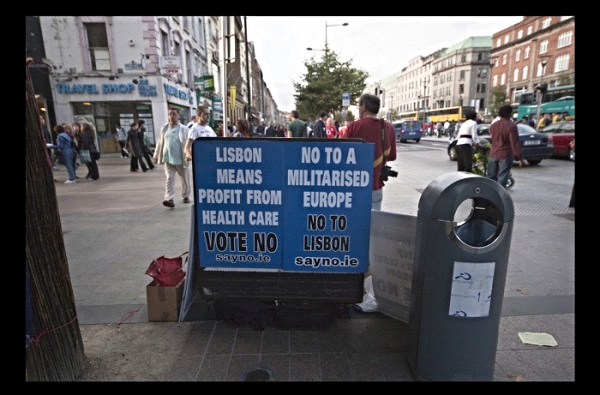
SIX YEARS ON SUPREME COURT CASE RAISES SERIOUS QUESTIONS ON VALIDITY OF LISBON-2 REFERENDUM AND “IRISH GUARANTEES”

Mr. Harry Rea (Applicant) and Ireland and the Attorney General, Maurice Coughlan the Referendum Returning Officer(Respondents) 2009/1042 JR.  Press Release - 2015-12-05

In the Supreme Court of Ireland on Monday 23rd November 2015, on appeal from the decision of the High Court, Application for Leave for Judicial Review, Mr Harry Rea, a plumber from Cork, presented a brief summary of his case to the Court.

He recalled that when the People voted in the second referendum on the Lisbon Treaty they did so on the promise that the “Irish Guarantees” would become a Protocol to the Treaty at the next accession treaty of a new member state. He said that the Court has to face up to the uncomfortable fact that the Irish State and the other States in the Union have failed to put that Protocol in place on the Accession of Croatia in 2013. That failure has effectively invalidated the Irish People’s ratification of the Lisbon Treaty. He said that it was against this background of Irish State failure and EU dysfunction that he was bringing the Leave Application.

His case is simple. The Government of Ireland negotiated a Treaty with the heads of the member states of the European Union in the form of a Decision. That Treaty put the protection of some of the Fundamental Rights of Irish Citizens into an international forum, in other words, the member states of European Union have guaranteed the rights of the Irish People.

Mr Rea asserted it is the responsibility of the Irish Government to protect Irish rights, However, the Lisbon Treaty Amendment to our Constitution does not contain any reference to the “Guarantees”. So the people were not asked to decide if they approved of the “Guarantees” Treaty made with the heads of state of the EU.

Article 29.4.9 can be invoked by a citizen if the State of Ireland adopted a decision to form a common defence policy in Europe that included Ireland. The Constitution in this Article mandates that the State shall not adopt such a policy. This is to some extent an expression of neutrality. It would have seemed a simple matter to have included all the guarantees in the same format – for example the State shall not transpose into Irish law any EU legislation that violates Irish Family Rights. In that way, any Family could invoke the Article to protect their rights against an EU law wrongly brought into force in Ireland.

He said, as the State did not include the “Guarantees” into the referendum they are not a part of Irish internal law and asked the question – “In what forum can an Irish Citizen invoke the “Guarantees”?

He said the State has alienated its responsibilities to protect our rights to the other member States of the EU. It is not within its powers to do so without approval from the people by way of constitutional amendment. The Treaty known as the “Guarantees” needed the approval of the Irish people.

He further said the disregard that the Irish State has for Irish Rights is plainly demonstrated by its failure to ensure that the Irish Protocol was put in place with the accession of Croatia to the EU.

Mr. Rea said that through the “Irish Guarantees” the State has made every other State in the European Union, apart from itself, responsible for questions regarding the Irish Constitution and the Rights of Irish Citizens thereunder.

The net result of this is that questions about Ireland’s Constitution, its meaning and interpretation, will be determined not in an Irish Court, but in a European Court in relation to the Treaty issues, whether in the form of a Decision of Heads of European States or as a Protocol.

Mr. Rea said that this was an impermissible alienation of powers. The people had never voted on the “Guarantees” and they do not form part of the amendment to the Irish Constitution.

The Court adjourned the case. The State will be asked to make submissions to the Court on the matter and Mr Rea was given three weeks to lodge an affidavit to inform the Court as to the accessible facts about the present status of the “Irish Guarantees” as a Protocol to the Lisbon Treaty.

For information and to contact Mr Rea:
Institute of Family and Marriage
National Office: Knockvicar, Boyle, Co. Roscommon
Email: familymen@eircom.net
Telephones: 00353 (0) 7196-67138 00353 (0) 83-3330256

Original article https://goodpointsite.wordpress.com/articles/press-release-lisbon/