Independence of Irish Data Protection Commissioner questioned

Digital Rights Ireland confirms legal papers to be served on Government in coming days

Original article Elaine Edwards Irish Times Jan 26,2016 via fliuch.org
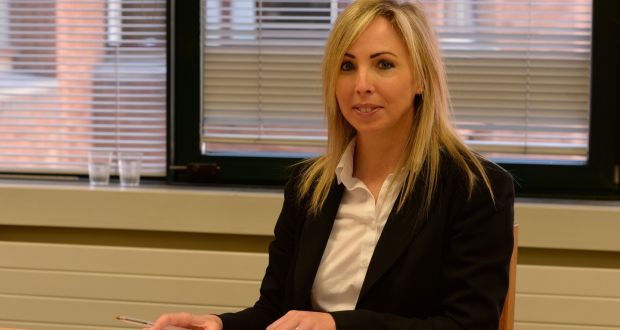
Digital Rights Ireland is to ask the High Court to refer questions about the independence of the Data Protection Commissioner Helen Dixon to the Court of Justice of the European Union. Photograph: Cyril Byrne/The Irish Times

Digital Rights Ireland is to ask the High Court to refer questions about the independence of the Data Protection Commissioner Helen Dixon to the Court of Justice of the European Union. Photograph: Cyril Byrne/The Irish Times

The High Court is to be asked to make a referral to the EU’s highest court for a ruling on whether Ireland’s Data Protection Commissioner is truly independent under EU law.

Legal papers will be served on the State and the Attorney General in the coming days claiming the State has acted in breach of EU law by failing to ensure the regulator exercises its role independently.

The action is being taken by the privacy advocacy group Digital Rights Ireland (DRI), which took a successful case to the Court of Justice of the European Union in 2014 overturning the entire regime under which the telephone and internet data of over 500 million European citizens were retained for up to two years.

The papers note that the office of the commissioner, Helen Dixon, is integrated with the Department of Justice and that the commissioner and all her office’s employees are civil servants.

They also allege the commissioner has failed to act independently in policing databases of citizens created in recent years by both Irish Water and the Department of Education.

Repeated criticism

The commissioner’s office is considered one of the most important regulatory roles in Europe because of the high number of multinational, data-rich firms based in Ireland, including Facebook, Apple and LinkedIn.

It has come under repeated criticism from some EU sources for being “soft” on regulation, partly because of the number of jobs such firms support here. That allegation has been denied by the current commissioner and by her immediate predecessor Billy Hawkes.

DRI confirmed on Thursday morning it had instructed its lawyers to serve legal papers on the Irish Government.

“Ireland’s position as the EU’s centre for technology multinational companies makes it critical for the protection of all EU citizens’ rights that the state has a world class data protection regulatory regime,” it said on its website.

It noted a series of cases decided by the CJEU had stressed the critical importance of a truly independent data protection authority.

“Most recently, in the Schrems case on Safe Harbour [the agreement under which the data of EU citizens could be transferred legally to the US], the lack of such an independent watchdog was cited as one of the most significant differences between the EU and US privacy systems.”

The organisation said its case was that Ireland had failed to properly implement EU data protection law, or to follow the requirements of the Charter of Fundamental Rights by failing to ensure the Irish commissioner was genuinely independent from the Government.

Key role

“Ireland’s DPC has a key role in Europe’s data protection landscape. From our 2014 case overturning data retention to the Schrems case, to the Microsoft v USA warrant case Ireland is the critical jurisdiction for the protection for the rights of citizens across the EU,” a spokesman said.

“Ireland’s data protection authority doesn’t meet the criteria set down by the EU case law for true independence. As the Irish Government has refused to acknowledge this to date, we are turning to the courts to uphold the fundamental rights of Irish and EU citizens alike.”

Thursday, January 28th, marks the 10th annual International Data Protection Day.

A spokeswoman for the commissioner said she could not comment on the case as neither the office nor the commissioner were a party to the proceedings.

Speaking to mark the event, Helen Dixon said a key priority for her office this year was the continued expansion of resources, including the further recruitment of legal and technical specialists.
DRI - “As the Irish government has refused to acknowledge this to date, we are turning to the courts to uphold Irish and EU citizen’s Fundamental Rights.”

DRI - “As the Irish government has refused to acknowledge this to date, we are turning to the courts to uphold Irish and EU citizen’s Fundamental Rights.”

She said the office was already seeing “huge benefits” from the recent additional staffing, particularly in delivering “faster resolutions for complainants”.

Ms Dixon said there was “a clear need for better compliance” with data protection law by the Irish public sector.

“In particular, the legislative process must be improved to ensure greater deliberation and scrutiny of issues that interfere with the fundamental right to data protection.”
A grand alliance of the left would shake up politics - and it might not be too far away

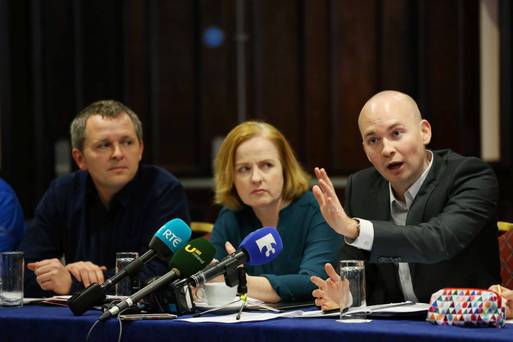
Richard Boyd Barrett, Ruth Coppinger and Paul Murphy at the Anti-Austerity Alliance-People Before Profit launch of a common principles document. Photo: Photo: RollingNews.ie

Richard Boyd Barrett, Ruth Coppinger and Paul Murphy at the Anti-Austerity Alliance-People Before Profit launch of a common principles document. Photo: Photo: RollingNews.ie

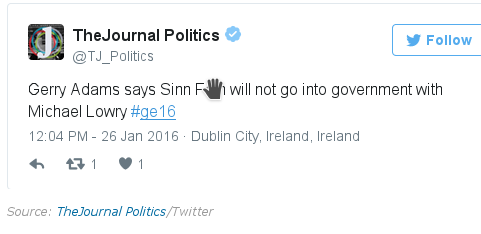
Never mind the mini-drama of who might dance with Michael Lowry in a future coalition. The real drama building up this week is the prospect of grand alliance of the left and who will dance with Sinn Féin. This is not so much because of its former paramilitary association - which is usually the objection of the bigger, more 'bourgeois' parties.

Of course, Coppinger and Murphy are right about Sinn Féin's essentially tribal politics, but many who would support such an alliance would consider that to be a rather rarefied reservation, given that what is on offer is the serious prospect of a grand left alignment, and one that would be much more radical than anything a shrunken Labour Party could provide. And it could really shake up the establishment.

As it is, almost all of the left already participate in the Right2Change campaign and Sinn Féin would say that the reluctance of Murphy and Coppinger to fully come on board has as much to do with their electoral rivalry with Sinn Féin in Dublin.

Remember, Murphy pipped Sinn Féin for a Dublin South West seat after it looked like Sinn Féin was wobbling on water charges.

In fairness, there was always going to be differences between all these left-wing elements, given their different historical origins, but if Sinn Féin could put something big together, it'd be hard to see Coppinger and others resisting. After all, they have almost exactly the same policies - for the moment.

And this is possibly the real crux. The harder left see Sinn Féin as a potential sell-out and an eventual bourgeois party, many of whose members would actually share power with Fianna Fáil.

Again, it was Coppinger and Paul Murphy who have described Sinn Féin as not a socialist party at all but a populist nationalist one, which in the North has in the past implemented austerity measures. Also, some of the hard left's policies announced this week, such as raising Ireland's much cherished low corporate tax to 15pc, might be a step too far for Sinn Féin.

The blunt reality is that the prospect of being in power on both sides of the border for the centenary of 1916 would be too exciting a prospect for more mainstream Republicans to resist sharing power with, say, Fianna Fáil.

After all, they are already sharing power with the DUP in the North, and can thus get their hands on the levers at Stormont. And surely if you can coalesce with Paisley's Unionists, you can coalesce with anyone. There is also the frank reality that Sinn Féin wants to be a mainstream political party, appealing eventually to the middle classes and building a truly national movement that is fresh and non-corrupt and re-ignites the values of the 1916 revolution. And there's absolutely nothing wrong with that.

But the left will be thinking of something quite different and would be closer to the ideals of the 1913 Dublin Lockout.

And they are prepared to forgo the broader political participation or imagery of power, for specific, strategic results.

So it's a fascinating dance. Throw in the attention-seeking Brendan Ogle and you've got a further recipe for unpredictability.

However, if such an alliance did happen, it could create a whole new power bloc, which would be a real magnet for protest politics, the hard left and radical nationalists.

It could also draw in left-wing independents such as Tommy Broughan or even John Halligan and Finian McGrath, who are surely out of sorts in the Shane Ross group of Independents.

But as it is, an alliance starring Mary Lou McDonald, Richard Boyd Barrett, Ruth Coppinger and Paul Murphy could be real box-office stuff, and would for the first time create a proper left-right divide in Irish politics.


Who is Michael Lowry and what’s everyone’s problem with him?

The Tipperary TD is the subject of the latest political controversy, but why is everyone talking about him?

YOU’VE PROBABLY BEEN hearing the name of Tipperary’s independent TD Michael Lowry a lot over the past few days.
At the weekend, Taoiseach Enda Kenny was asked repeatedly by TheJournal.ie and others whether he would rule out doing a post-election deal with Lowry.

Such a deal would involve negotiating a list of spending and policy commitments for deputies and their constituents in return for them offering their support to the government in Dáil votes.

On current polls, the Fine Gael-Labour government will be short of the necessary support to have a majority in the Dáil and therefore may need to hammer out such deals with independents.

Kenny’s refusal to explicitly rule out the prospect of a deal with Lowry in particular has sparked a political controversy. This evening, his spokesperson outlined the official position:

We are asking the people to choose stability and re-elect the current government so that we can keep the recovery going. We are not contemplating engaging with any independent.

But in contrast to that slightly open statement (note the use of ‘contemplating’), Labour ministers and backbenchers are firmly ruling out the idea.

Labour’s deputy leader Alan Kelly said his party will “never work with or ask for the support of anyone like Michael Lowry”. This evening, a spokesperson for Joan Burton said:

The Tánaiste does not think it would be appropriate that the individual concerned would be part of any future government.

Several Fine Gael backbenchers have told the Irish Examiner and other media that they are against the idea. But Fine Gael ministers have been more reluctant with Paschal Donohoe among those who refused to enter into a discussion on Lowry when asked by this website yesterday.

This morning, Fine Gael’s outspoken health minister Leo Varadkar broke ranks by saying he would not like to see the government dependent on independent TDs “who have issues with the law” when he was asked about Lowry.

Meanwhile, both the leaders of Fianna Fáil and Sinn Féin have ruled out doing any post-election deal with Lowry.

But who is Michael Lowry? 

Born and bred in Tipperary, the 62-year-old has been a TD in Tipperary North since he was first elected in 1987 as a Fine Gael deputy. He is running for re-election this time around in the larger, five-seat constituency of Tipperary.

Before entering the Dáil he was a county councillor for eight years and, in the early 1980s, was the youngest-ever chairman of the Tipperary GAA county committee. Later, as chair of the Semple Stadium development committee, he raised the necessary funds to refurbish the ground. According to Lowry’s website:

The stadium was on the brink of insolvency with €1.5million in debts following the 1984 GAA Centenary expenditure. The pop festival ‘Feile’, The Trip to Tipp was the brainchild of Michael who introduced it as a means of successfully repaying the outstanding debts. To this day it is known as one of the best pop festivals of all time in Ireland.

He also founded a commercial refrigeration business in the 1980s. It is one of a number of businesses that he is listed as a director of with interests ranging from construction to bloodstock and livestock.

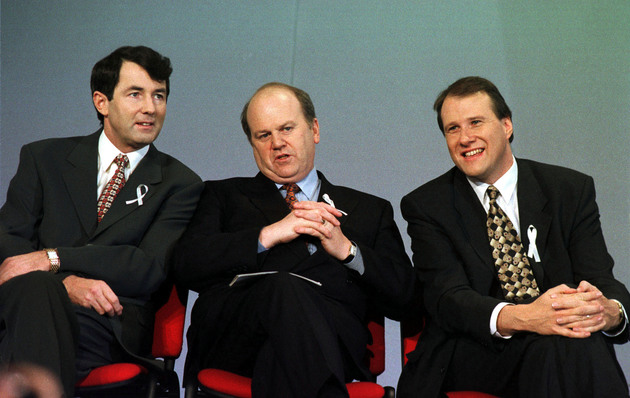
Michael Lowry with former cabinet colleagues Michael Noonan and Ivan Yates at the Fine Gael Ard Fheis in 1996

Michael Lowry with former cabinet colleagues Michael Noonan and Ivan Yates at the Fine Gael Ard Fheis in 1996

In 1993, Lowry became chairman of the Fine Gael parliamentary party and the following year he led negotiations that paved the way for the Rainbow Government of Fine Gael, Labour and Democratic Left. He was appointed Minister for Transport, Energy and Communications in cabinet alongside future taoiseach Enda Kenny, who was Minister for Trade.

The controversies

Lowry was forced to resign from cabinet in 1996 following a succession of political scandals. He was barred from standing as a Fine Gael candidate in the election the following year but ran as an independent and topped the poll.

The McCracken Tribunal later revealed that the supermarket tycoon Ben Dunne paid for the extension to Lowry’s home in Tipperary and concluded that he had evaded tax.

In 2007, Lowry was among the independents whom Bertie Ahern’s Fianna Fáil negotiated deals with in return for their support of the government in the Dáil. The deal brought significant investment to Tipperary. Lowry’s website states:

Michael conditionally supported this Government as he believed that this was the best way to represent the interest of the constituents. He believes that “it is better to light a candle than to curse the darkness”. It is widely recognised that by supporting this Government he ensured significant investment for North Tipperary.

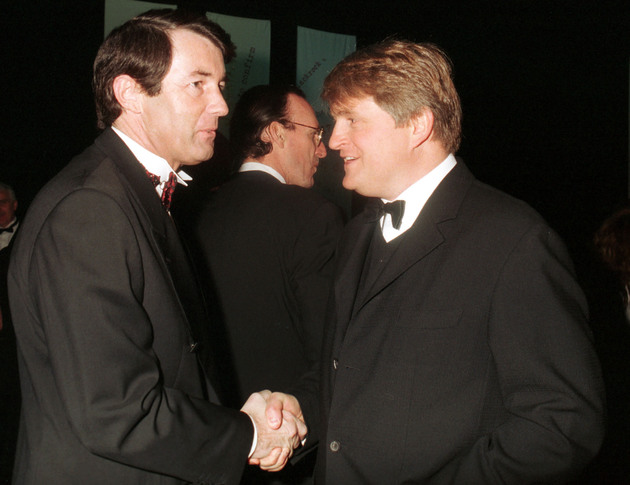
Michael Lowry and Denis O'Brien in 1997

Michael Lowry and Denis O'Brien in 1997

In 2011, the Moriarty Tribunal found that Lowry had an “insidious and pervasive influence” on the bidding process for the second mobile phone licence in Ireland when he was a minister in the 1990s.

The licence was granted to the Denis O’Brien-owned Esat Telecom in 1995. The tribunal found that O’Brien made or facilitated payments of hundreds of thousands of sterling to Lowry. Lowry and O’Brien have both rejected the findings.

Shortly after the report was published the Dáil passed an all-party motion to censure Lowry and called on him to resign his seat. The motion was non-binding so Lowry was under no obligation to resign.

It was recently reported that the Criminal Assets Bureau is actively investigating the tribunal report.

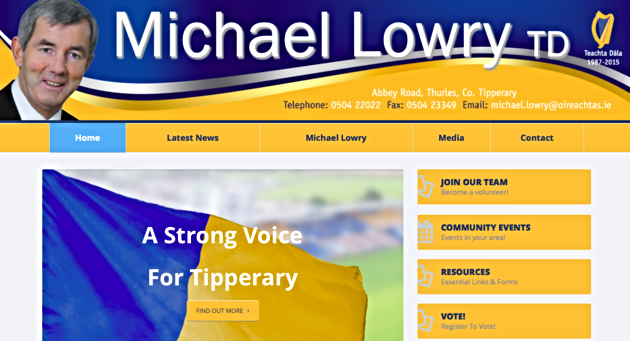
Michael Lowry's website

Michael Lowry's website

Despite these and other controversies, Lowry has topped the poll in every election since 1997 and secured over 14,000 first preference votes in 2011. This is because Lowry and his team of local councillors, including his son Michael Lowry junior, are widely perceived as delivering a quality service for the local area.

The so-called ‘Lowry Team’ make themselves available to deal with constituents at every available opportunity. They efficiently deal with their concerns and queries over issues like health and social welfare. Lowry’s 2007 deal with Ahern and Fianna Fáil delivered significant infrastructural investment in Tipperary.

“I represent the people, they are very happy with the service that I deliver to them,” Lowry told Newstalk today. He dismissed the current controversy as a “media frenzy fuelled by political opponents”.

He is open to a post-election deal and insists he would act in the bests interests of the Irish people. But he has also repeatedly said everything must wait until after the election, when the people have had their say. He insists that no one has been in touch with him about a deal.

The problem

The concerns about Lowry arise from the controversies listed above, the ongoing legal actions in relation to his tax affairs and a CAB investigation into the findings of the Moriarty Tribunal.

Lowry is viewed as a political pariah in Leinster House circles and has been the subject of constant media scrutiny in recent years. This has only strengthened his popularity at home with many in Tipperary believing the Dublin elite have it in for the ‘local boy done good’.

But for the political parties, Lowry’s association with tribunals, tax controversies and the divisive media baron Denis O’Brien present unwelcome headlines were they to align themselves with them.

Fianna Fáil’s decision to do a deal with Lowry in 2007 raised eyebrows, but today Micheál Martin insisted things had now changed from his party’s point of view:

I think the Moriarty Tribunal has come in the intervening period and that says very strong things in terms of Michael Lowry’s involvement and interference in the awarding of that particular mobile phone licence, and that is something that all political parties cannot fudge.

As for Fine Gael, the party effectively blacklisted Lowry nearly 20 years ago when he resigned from cabinet. Doing a deal with him after the election would be seen as regressive and has already caused considerable disquiet among backbenchers.

Kenny’s failure to explicitly rule out the possibility is becoming increasingly problematic. The party hierarchy will have to outline a more coherent response to questions that are likely to continue in the coming weeks.

Original article thejournal.ie Fri Jan 29, 2016