Buncrana Against Irish Water Press Release Irish Water Insulting Inishowen Community

Irish Water working in Ard Ban, Muff, Co Donegal with a logo on their van and without safety barriers.

Irish Water working in Ard Ban, Muff, Co Donegal with a logo on their van and without safety barriers.

This is  a press release on behalf of Buncrana Against Irish Water.  It has been released as a result of the way Irish Water has begun their meter installation in Inishowen, Co Donegal.   A spokesperson for the group felt it necessary to inform the public that Irish Water are not giving warnings when they are coming to your area to cut off water supply and install meters.   The statement has been sent to local press, Irish Water, An Garda Siochána and local TDs and councillors.

Press Release

Buncrana Against Irish Water is very concerned about the way Irish Water has begun meter installations in Inishowen.

Just like other parts of the country, Irish Water are starting installing meters here without giving prior warning to households.  They are installing meters  even though residents have notices on their premises stating that they do not want a meter and that they do not have nor want a contract with Irish Water.

Irish Water have clearly stated that they will give household 2 week's notice that they are coming to the area, then 3 days to households where they are going to install meters and then they will call to houses to let people know that work is going to commence.  

Irish Water have also clearly stated that they will give these warning in their literature, in the media and also  in An Garda Siochána web page.  It is part of the protocol  for them to to inform An Garda Siochána and the local authority when they are coming to an area.  These warnings are normal practice.  It is also common decency to give warnings.  It is a public order and a health and safety issue.

Irish Water workers in Ard Ban, Muff, Van logo camouflaged 

Irish Water workers in Ard Ban, Muff, Van logo camouflaged


Buncrana Against Irish Water have been informed by people in the Muff/Quigley Point areas that they have not received any warnings whatsoever.  How can this be right?  Clearly Irish Water are  reneging on their promises.  It does not help community relations and it is potentially dangerous since it involves turning off water supply.  This  does not bode well for the future especially when the bigger metering contractors come.

It is a downright insult to people in Inishowen.  It is a kick in the teeth.  Buncrana Against Irish Water,  spent a lot of  time and  effort  liaising with Irish Water and An Garda Siochána in the hope that a compromise might be agreed.
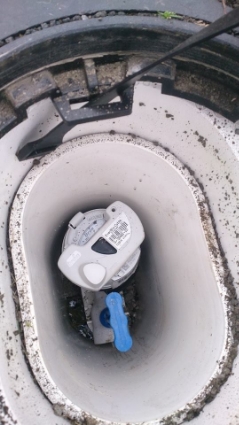
One of the Meters Installed in Ard Ban in Muff, no notice given and no one informed residents

One of the Meters Installed in Ard Ban in Muff, no notice given and no one informed residents

The BAIW demand that Irish Water adhere to their promises and to respect our community.  BAIW remind Irish Water that this is a civil matter between them and those who do not want a meter nor a contract.  If Irish Water feel that they are justified then they have recourse to the courts as stated in The Water Services Acts.  

Buncrana Against Irish Water demand that An Garda Siochána and the local authority oversee Irish Water activities, to protect our rights and  health and safety of the community.  

Finally BAIW request all our elected representatives to help the residents of Inishowen.

This Statement was sent to all TDs in Inishowen, Councillors, An Garda Siochána and Irish Water.  Irish Water replied attaching 2 brochures which householders should receive 2 weeks prior to installation and stating date work commences and safety procedures. 


Below are two extracts from Irish Water's Brochures which were attached to their email reply to Buncrana Together.

Irish Water clearly state that these explanatory leaflets will be sent to each household 2 weeks prior to installation. The one below should give date work commences.

Notice they keep referring to 'Your Water Meter'

Notice they keep referring to 'Your Water Meter'

IWM-Brochure-datecommence.jpg

Stating clearly 2 weeks notice and then 2 days

Independent TD Catherine Murphy Calls for Full Independent Inquiry Into Sale of Siteserve to Denis O'Brien

Catherine Murphy's  Relentless Pursuit of Truth Into IBRC, The Government And irish Water

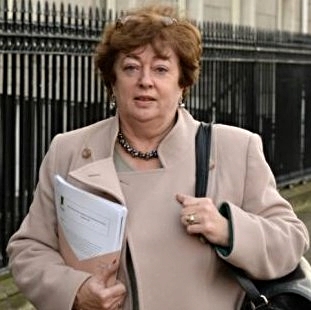
Catherine Murphy Independent TD for Kildare North

Catherine Murphy Independent TD for Kildare North

Slowly but surely Catherine Murphy's  relentless pursuit of the truth into the sale of Siteserv to Denis O'Brien's in 2012 is beginning to show some positive results.   Today in the Dail Catherine Murphy and opposition TDs called for an independent inquiry into IBRC transactions, including the 2012 sale of Siteserv to a company controlled by Denis O’Brien.  The truth as envisaged by Catherine Murphy could have serious consequences for the coalition government.  It also would question the legitimacy of Irish Water Ltd.  Mr O'Brien's  GMC Sierra, a subsidiary of Siteserv was controversially awarded the contract to install water meters throughout Ireland by Irish Water.

Siteserv has five subsidiary company’s including: Sierra, DSL, Holgate, (a subsidiary of Sierra) RoanKabin, EventServ and Siteserv Access and Formwork.

Siteserv has five subsidiary company’s including: Sierra, DSL, Holgate, (a subsidiary of Sierra) RoanKabin, EventServ and Siteserv Access and Formwork.

Murky Dealings

The murky dealings have been highlighted in Ms Murphy previous statement in her reply to  numerous Parliamentary Questions, when she said

“I’m not surprised by the replies which confirm what I and others have long suspected – that the background to this deal and the eventual awarding of the metering contract is mired in convenient circumstances that all amount to something which leaves a very bad taste in the mouth of most right minded citizens.”

a Little Background

Catherine Murphy, Independent TD for North Kildare, has been asking questions of Finance Minister Michael Noonan in the Dáil about IBRC’s sale of Siteserv to Denis O’Brien.  Mr O’Brien bought it for €45.4million cash while Siteserv owed Anglo €150million.  The sale involved IBRC writing off €100million of Siteserv’s debt with €5million distributed to Siteserv’s shareholders.
After the sale of Siteserv to Mr O’Brien, GMC Sierra won a State contract to install water meters. GMC Sierra is comprised of GMC Utilities Group and Sierra Support Services Group. Sierra is a subsidiary of Siteserv.  For the full story of the deal see this article Siteserve Deal Won't Go Away - Michael Noonan Finance Minister In Deep Water

Sean Corkery CEO Siteserve

Sean Corkery CEO Siteserve

Hitting a nerve

Ms Murphy's past questions about IBRC and Siteserv have invoked anger and scorn in the past such as from Sean Corkery, CEO Sitserve when he said:

“I’m getting a little bit fed up of the constant questioning from Catherine Murphy in the sense that it’s the same questions and I think she knows what the answer is, which is that everything was completely above board.  I’m trying to run a company.  I’m the CEO and when statements are made that are untrue they affect customers, suppliers and employees,” he said."  Irish Times

Denis O'Brien Irish billionaire, net worth £3.854 billion (2014)

Denis O'Brien Irish billionaire, net worth £3.854 billion (2014)

Freedom of Information Documents Redacted

As a result of the constant questioning by Catherine Murphy received documents from the Dept Of Finance today as a result of freedom of information requests.

The documents were  redacted, a  lot of relevant information was blacked out, as can be seen in the video below.  
This seems highly suspicious and it will not do anything to reduce public scepticism in the Government and in particular Mr Noonan, Minister of Finance.

In a later statement to Newstalk, IBRC chairman at the time of the sale Alan Dukes, Fine Gael,  said  "I categorically reject suggestions that there was any impropriety in the sale of Siteserv by IBRC in March 2012. All aspects of the sale were considered in detail by the board of the bank and the decision made was considered to be the best course of action available, in the interests of the shareholder and of the State,"

Alan Dukes Chairman IBRC 2012 

Alan Dukes Chairman IBRC 2012


Information contradicts Minister of Finance

However, what information the files do show, Ms Murphy said contradict responses to Parliamentary Questions she received from Mr Noonan.  In the files senior officials express reservations about a number of 'poorly executed' large transactions made by the Irish Bank Resolution Corporation, including the sale of Siteserv to Millington owned by Denis O'Brien.

Mike Aynsley former CEO IBRC

Mike Aynsley former CEO IBRC

SiteServ Deal

One of the documents state "SiteServ is the subject of a separate memo but to summarise we are concerned with the quality of some of the decisions taken in respect of this transaction. The sale decision has raised a number of areas where we believe that decisions taken by IBRC resulted in a less than optimum return for the bank. The transaction has also been the subject of a number of PQs and press queries which further questioned the commercial rationale for some elements of the sale including payments made to existing stakeholders. We are recommending that the Chairman is asked to commission a full independent review in relation to the Siteserv transaction"

Ministers Integrity question

In an article in the journal.ie  Ms Murphy  questioned whether Noonan was being genuine when he “insisted he was satisfied that the SiteServ deal represented the best deal for the State”.  She went on to say “The documents I receive today really make me question whether or not the Minister really believed that was the case,” she told reporters.

Fine Gael Minister of Finance Michael Noonan

Fine Gael Minister of Finance Michael Noonan

Catherine Murphy's video showing heavily redacted files

Catherine Murphy TD receives an FOI response to her questions regarding the sale of Siteserv by IBRC in 2012


study finds the water charge protest has politicised and energised Irish citizens

Study finds the water charge protest has politicised and energised Irish citizens who are no longer willing to take things lying down, writes  Rory Hearne.

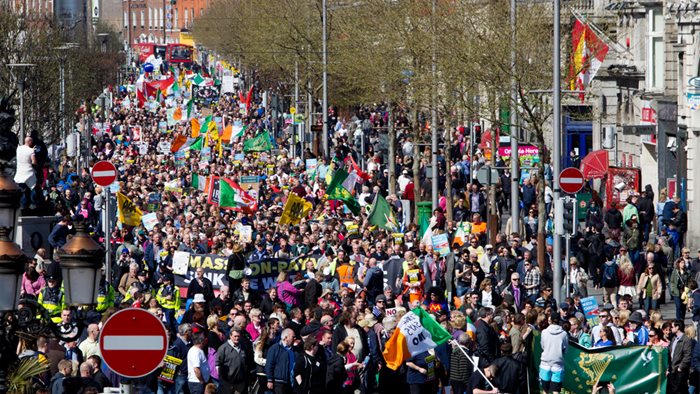
Anti water charge demonstration O'Connell Street, Dublin on Saturday April 18,2015

Anti water charge demonstration O'Connell Street, Dublin on Saturday April 18,2015

IT MIGHT appear to some that some of the political heat has evaporated from the Irish Water debacle and that the Government has won the “water war” by its acceptance of its mistakes, the water charge reductions and extension of registration deadlines.

However, the results of research into the views of water protesters, research I undertook recently, suggests that this battle is far from over.

A large majority (70%) of the 2,556 water protesters who completed the online survey (developed and analysed by myself and some of my students in the department of geography in Maynooth), believe that the campaign will be successful.

Some 92% stated they do not intend paying for water charges and 90% felt the tactics of the Right2Water movement have been effective. This indicates a high level of confidence and determination among protesters that the water charges and Irish Water will be abolished.

It is also very supportive of the Right2Water trade unions, political parties and grassroots “says no” groups. Survey respondents believe the protests have brought the water charges to the top of the political agenda and made the Government “take stock and realise that the people of Ireland have had enough” and that “they are not taking this one lying down”. Protesters intend to extend the campaign to boycotting the water charge.

Respondents explained that their opposition to the water charges is motivated by anger at the cumulative impacts of austerity (which was the most cited reason for protesting), and the bailing out of the banks, developers, and the European financial system at “the expense of the vulnerable, working and middle income people in Ireland”.

They highlighted that they could not afford the charges because of pressure from household bills, rent increases, illness, reliance on welfare such as disability, being a student living off loans, and facing repossession and homelessness. Some explained they were going without basic necessities such as food.

They also described feeling “betrayed”, “let down”, and ‘ignored’ by the Government and highlighted that the people were “citizens” and not just “consumers”. The water protesters believe “the peoples’ natural resource [water] is being given away to the governments’ corporate friends in the golden circle”.

They criticised corruption and cronyism and claimed the Government is “putting the interests of big business, corporations, Europe, bankers and bondholders, before the interests of the Irish people”.

The protesters do not trust either the Government or Irish Water, and believe that charges will increase in the future and that Irish Water will be privatised unless “the people” stop it.

Respondents felt the protests have been successful because they were “a genuinely grassroots and local movement and [have] mobilised every village, town and city” and “rallied Irish people from all walks of life”.

A majority of respondents (54.4%) stated that they had not participated in any previous protest. Indeed the water protests are the largest and most sustained social movement in Ireland since independence.

At a local level, communities have been engaging in protests against water metres for over two years. At a national level, there have been five demonstrations that have drawn between 20,000 and 150,000.

The respondents explained that, in their view, they have the power to stop the implementation of the water charges through large-scale protest, non-payment and protest at water meter installations. This is different from other austerity measures such as the household charge where people did not have the same power to protest as it was enforced by revenue or cuts were made directly to wages and public services.

Media portrayal of the anti-water movement was criticised with 86% describing it as “negative”, being “biased”, and acting as “government supporters”. Some 82.6% said they were most informed about the campaign from social media while 6.4% relied on traditional media outlets.

There was an overwhelming desire expressed for a fundamental change in politics. Very significantly, 45% said they voted for establishment parties (FF/FG/Labour) in 2011 but indicated that they are changing their vote to the opposition Left parties and independents in the forthcoming election.

One in three (31.7%) said they would vote for PBP/AAA, 27.5% said for left-wing independents, 23.9% for Sinn Fein and only 5.6% for right-wing independents. Some 77% of respondents said they believed the most effective way of getting change was through protesting, while only 28% saw contacting a political representative as effective.

This suggests the water movement represents a new form of “people-empowered” politics. Also 79% of respondents stated they would vote for candidates affiliated to or endorsed by the Right2Water campaign, again highlighting the important role water charges could play in the coming election.

Despite the strong support for leftist parties, a large proportion (79%) want to see a new political party formed. They want this new party to be anti-austerity; anti-corruption, anti-cronyism; for radical political reform involving a “clearing out” of “establishment” political parties and for a democracy where “government acts for the people and not the elite or golden circle”.

They want it to stand for fairness, equality, social justice, and the right to housing, health, water, education and protection of the poor and vulnerable. It should also stand up to Europe (particularly on the debt), and “take back” Irish natural resources (gas, fisheries, etc) “for the people of Ireland”.

The opinions, values, and language used by the majority of respondents could be classified as broadly left-wing but only a minority of respondents used this term. A new political party aiming to involve and represent water protesters is, therefore, more likely to be successful if it develops an inclusive anti-austerity, rights and equality-based platform, that attempts to reflect the diversity of excluded groups, from the rural to the urban, the poor, working and suffering middle classes. Interestingly, respondents also made reference to the failure of the establishment parties to live up to the ideals of the Republic.

A new Podemos-type party calling for a new republic could be well placed to build in this space. Whether this happens or not, what is clear from this groundbreaking study is that the water protests have catalysed a process of empowering significant numbers of Irish people who had not been involved in protest or anti-establishment politics before. They are becoming politicised and active citizens. The Irish Water movement is indeed transforming Irish society and politics as we know it.

Rory Hearne is a lecturer at the department of geography, NUI Maynooth

Rory Hearne is a lecturer at the department of geography, NUI Maynooth