France: Protestors Rise Up In Their Millions Against Ruling Class

French protestors are rising up in their millions against a ruling class determined to take away their rights. There is anarchy on the streets of France as the mainstream media continues to suppress the scale of events.

Thousands of masked protesters and police fought running street battles in France this week, with police using water cannon to quell rioters who hurled projectiles at them and destroyed storefronts, joining the millions of French citizens who have protested against new anti-worker laws that are designed to protect and enrich a wealthy elite at the expense of ordinary people.
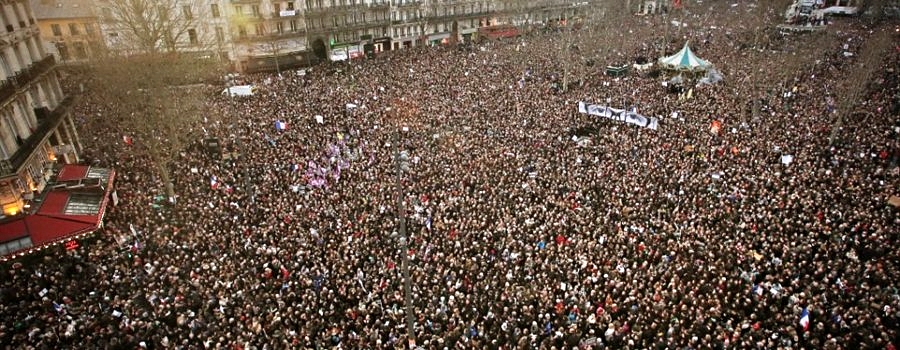
The protesters in Paris represent all working class people united, mobilized, and resisting the greed of globalist elites. Police involved are violently fighting against the people and protecting the interests of the ruling class.

However as the government, police and mainstream media continue to suppress this important movement’s progress, the people continue to rise up.

Western mainstream media continues to suppress information regarding the scale and intensity of the revolution taking place on French streets.

While the world distracted by the Euro 2016 football championships in France, the elites are taking away people’s rights and blood is being shed on the streets.

There is anarchy in the streets and the police are having trouble keeping pace. They have begged the protestors to stop the relentless protests, complained of exhaustion, and have even held their own protest against ‘the brutality of the protestors’ – that resulted in a police car getting torched.

The government have also tried to make protesting illegal, while they attempt to push the new laws through the lower house without a vote using a constitutional manoeuvre. With the two chambers unlikely to agree a final version, the lower house will have the final say, and the government is expected to use the same manoeuvre to pass the bill into law without a vote.

According to an opinion poll published on Tuesday, 73 percent of the French would be “shocked and appalled” by such a move.

The new law is referred to by the name of the Minister of Labour Myriam El Khomri, and was first presented by her in February, sparking a series of relentless protests that show no sign of stopping.

The El Khomri legislation was introduced in its original French as the “draft legislation aimed at implementing new freedoms and protections for businesses and workers.” To refer to this law as a new freedom or protection for workers is laughable, and is really a kick in the face for the people. What the law really does is expand protections and freedoms for the wealthy elite and no one else.

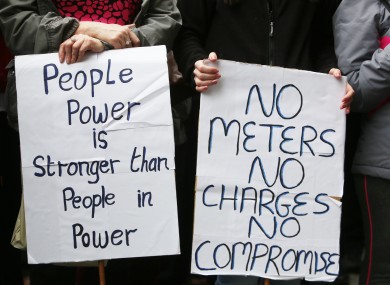
The protests began on March 9 with the movement being called “Nuit debut,” translated roughly as “standing up all night.” The French ruling class is trying keep control through the police baton in order to keep the masses down. The El Khomri bill essentially boils down to stripping people of their rights and giving more control to the elites. The French job market reform is outrageous for a country struggling with a high unemployment rate of 10 percent and a stagnant economy.

Although the movement is centered primarily around the job market reform bill, there are much broader concerns involved, such as: universal basic income, opposition to the Transatlantic Trade and Investment Partnership (TTIP), amnesty for undocumented workers, solidarity with refugees, and the gender pay gap. France’s mobilized collective are on a progressive mission to create another world to realize social justice and demand dignity for ordinary people.

President Hollande and Prime Minister Manual Valls say they will not listen to the millions of protesters or the massive majority of citizens who disapprove of the law. Since the French protests began attempts have been made to hinder their cause. Every measure to dismiss the protesters has been attempted; everything from police teargas to the Prime Minister Valls portraying protestors as “rioters” and “ultra-violent youths.” French Interior Minister Bernard Cazeneuve had the gall to tell protesters “to find within themselves a little humanity, tolerance and respect. “

Even the police have tried to garner sympathy away from protesters when they claimed they were too “exhausted” to deal with continued protests. French leaders have threatened a ban on protests, with even tougher crackdowns by police, after Valls claimed that the protesters were out “to kill a police officer.” The threatened ban by the French government on demonstrations was reverted on June 22 after falling under harsh criticism and backlash.

Original article; yournewswire.com, June 30, 2016

Chairman of newly selected commission Joe O'Toole should resign says Anti Austerity Alliance

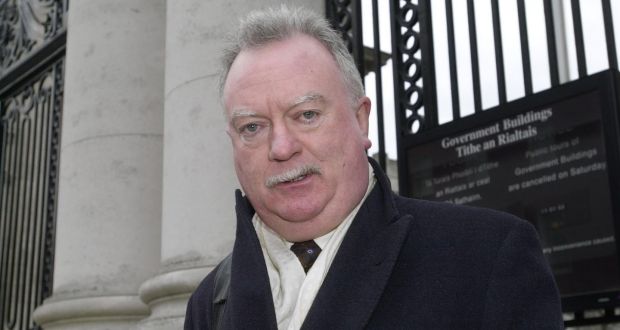
The Anti-Austerity Alliance has called for newly appointed chairman of the Water Commission Joe O’Toole to resign from his position saying that he is clearly biased in favour of water charges and therefore unfit to chair the commission.

Newly selected chairperson of Irish Government's Water Commission Joe O'Toole

In the interview on Newstalk this morning, O’Toole said that ‘central taxation is not enough to pay for it’, that the Commission was a ‘political exercise’, which would look for a solution which would ‘have enough sugar on it to make the medicine go down easily’ after the result of the general election which saw 70% of TDs returned to the Dáil who were either in favour of scrapping water charges or suspending them.

Paul Murphy TD said “After Joe O’Toole’s comments on Newstalk this morning, his appointment and position as the chairman of the Water Commission is now completely untenable.

“The interview which he gave this morning shows that he is clearly in favour of water charges and biased. He clearly rejects the idea of paying for the provision of water through central taxation and is therefore in favour of charges.

“His comments that he would be looking at ‘the work Revenue have done and would draw on that’ fundamentally exposes that for him this is about how you collect water charges rather than whether charging is the correct model.

“This fatally undermines his position when the reason for the setting up of this commission has been that through mass protest, boycott and the elections people have rejected charging for water.

Mick Barry TD said “Joe O’Toole’s previous comments on water charges in the Seanad show that he is unsuitable to chair the Commission.

“As early as 2010, he had welcomed a proposal by Siemens to provide water meters which would be funded through water charges. He is a safe pair of hands for the government and Simon Coveney to deliver the verdict they want on the need for water charges.

“He also said that this was a ‘political exercise’ to find a method of having ‘enough sugar’ on water charges for people to accept them. For us and the vast majority of people, this Commission has no credibility. It has been set up to get the result which the government wants. The Dáil was democratically elected four months ago and has a mandate to get rid of water charges and that is where the decision should be made”


The government has handpicked these 'water experts' to tell us what to do with Irish Water

AN EXPERT COMMISSION has been established to examine how Ireland should fund its domestic public water services.

The eight-person group will be chaired by former senator Joe O’Toole. They will be expected to report their recommendations to a special Oireachtas committee by the end of November.

Experts from across the globe have been called upon to give their insights into how the government should fix the Irish Water debacle.

They include the OECD’s environmental director Dr Xavier Leflaive and former Scottish minister Peter Peacock who currently chairs the Customer Forum for Water Scotland (where the average household pays about £339 per year for water).

Also on the new committee are Bill Emery, the chair of the Northern Ireland Utility Regulator; Brendan O’Mahony, the chair of the National Federation of Group Water Schemes; Sarah Hendry, an academic lawyer from the University of Dundee who specialises in water and environmental law; Dr Andrew Kelly, an environmental economist and founder of EnvEcon; and Gritta Nottelman, a strategy consultant for Waternet, the only water company in the Netherlands that is dedicated to the entire water cycle.

Minister Simon Coveney says he chose these people because they have the necessary professional experience to address the “complex issue” that is water charges in Ireland.

Once they report in November, that special committee will then have three months to decide what is the best course of action. Its recommendations will go to the entire Oireachtas by the end of February.

A vote on those final recommendations will be held by the end of March next year.

The commission, set up today, will be taking submissions from all interested parties, the government confirmed this afternoon.

It will consider the role of the regulator, Ireland’s environment obligations under domestic and international standards and the need to encourage water conservation.

The Commission is also tasked with assessing the maintenance and investment needs of the public water and waste water system and examining proposals on how the national utility in State ownership would be able to borrow to invest in water infrastructure.

Water charges have been suspended while this process is underway.

Original article; thejournal.ie, June 29, 2016